
Leeks
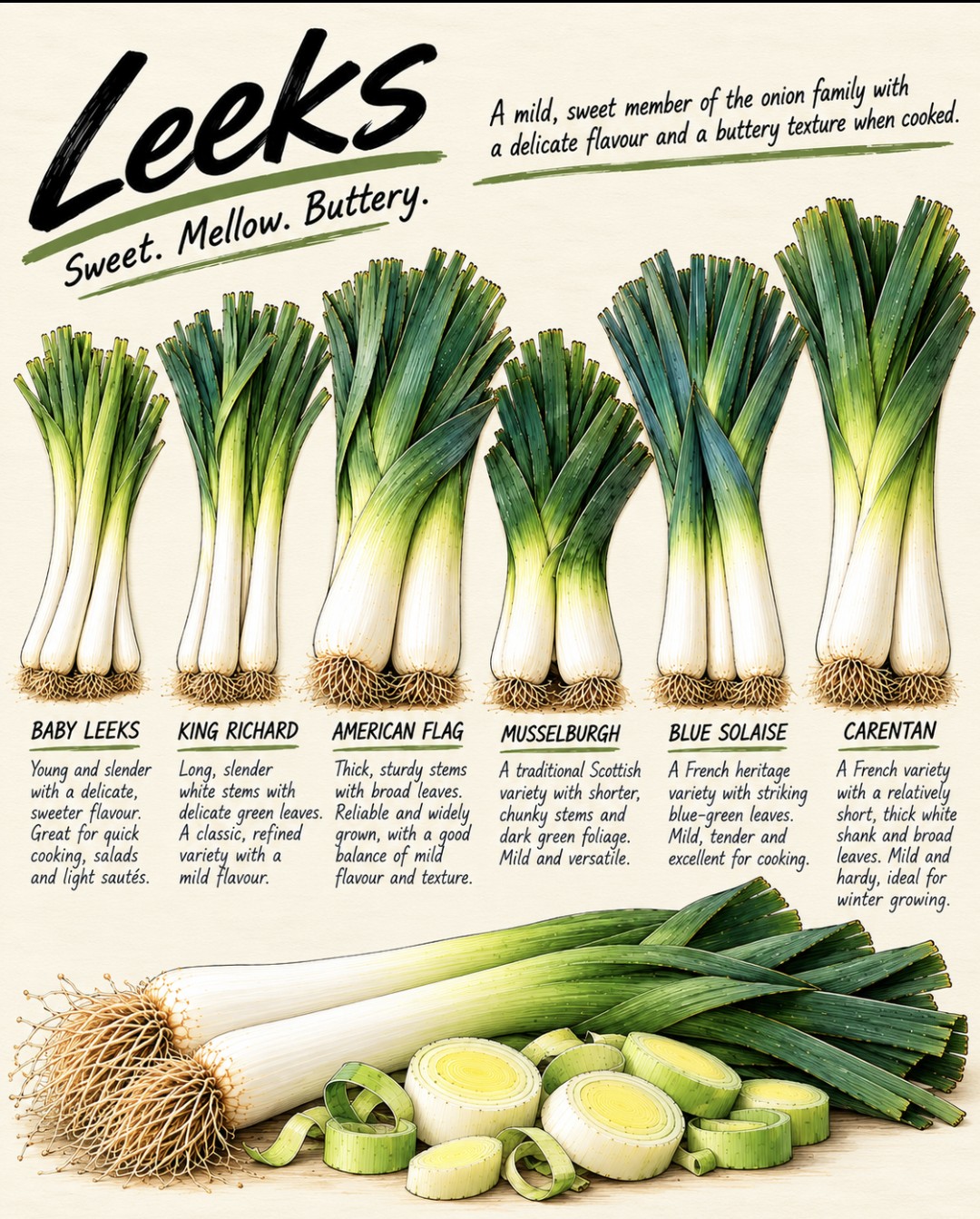
Flavour Profile
Sweet, mellow and savoury with an onion-like depth, without the sharp sulfurous bite of raw brown onions.
Slow cooking softens the leek's fibrous structure, mellows its raw allium pungency, and concentrates its existing sweetness. It enriches creamy sauces, braises, and stocks without overpowering accompanying ingredients.
Health Benefits
Leeks provide dietary fibre, including prebiotic inulin which feeds beneficial bacteria in the gut.
They contribute vitamin K, with actual intake depending on your portion size. They also supply the carotenoids lutein and zeaxanthin, alongside polyphenols such as kaempferol — plant compounds studied for their antioxidant properties and potential role in vascular health.
Buying Tips
Look for leeks with straight, firm white shanks and crisp, tightly wrapped pale-to-dark green leaves.
Avoid leeks that feel soft or spongy, or show slimy outer layers. Check the centre for a hard, woody flowering stem (bolting), which is a clear warning that the inner core will be tough. Small-to-medium stalks are often more tender and quicker to cook than oversized ones.
Storage
Store whole, unwashed leeks in the crisper drawer of your fridge, loosely wrapped in a paper bag or perforated produce bag. They will keep well for up to two weeks.
Do not wash or trim the root base until you are ready to cook, as trapped moisture between the layers encourages rot. Once trimmed and sliced, store in an airtight container lined with a dry paper towel and use within two to three days.
Cooking Uses
A versatile aromatic across British and European kitchens.
Gently sweated in butter as a sweet, tender base for creamy chicken pies, potato and leek soup, and quiches.
Halved lengthways and braised slowly in chicken stock, or roasted over high heat until the outer layers char and the centre turns meltingly tender.
Forkin Food Theory
Because soil is banked up around growing leeks to blanch their stems white, grit frequently settles between the leaf sheaths — both in the pale shank and up into the green leaves.
To clean them thoroughly, trim the root base, halve the stalk lengthways, and fan out the layers under cool running water. If you are keeping the dark greens for stock, wash them just as thoroughly: soil often lodges where the leaves divide.
In terms of cooking temperature, the technique dictates the heat. For velvety bases in soups and pies, sweat them gently with butter or oil and a pinch of salt to release moisture and soften them evenly without browning. For char and contrast, high dry heat or roasting browns the outer edges quickly while leaving a tender, juicy centre. Both methods work — match the heat to the finished texture you want.
Wild & Wonderful
Don't bin the dark green tops. While too fibrous for quick sautés or pie fillings, they carry plenty of savoury depth. Wash them well to clear any trapped grit, slice them up, and keep them in your freezer bag for your next batch of roast chicken bone stock.
The leek has served as a recognised national emblem of Wales for centuries, frequently worn on St David's Day, though traditional tales linking it to specific early battles remain legendary rather than historically documented.
Blanched leek ribbons can also be used as edible ties for bundles of herbs or stuffed meat rolls.