
Potatoes
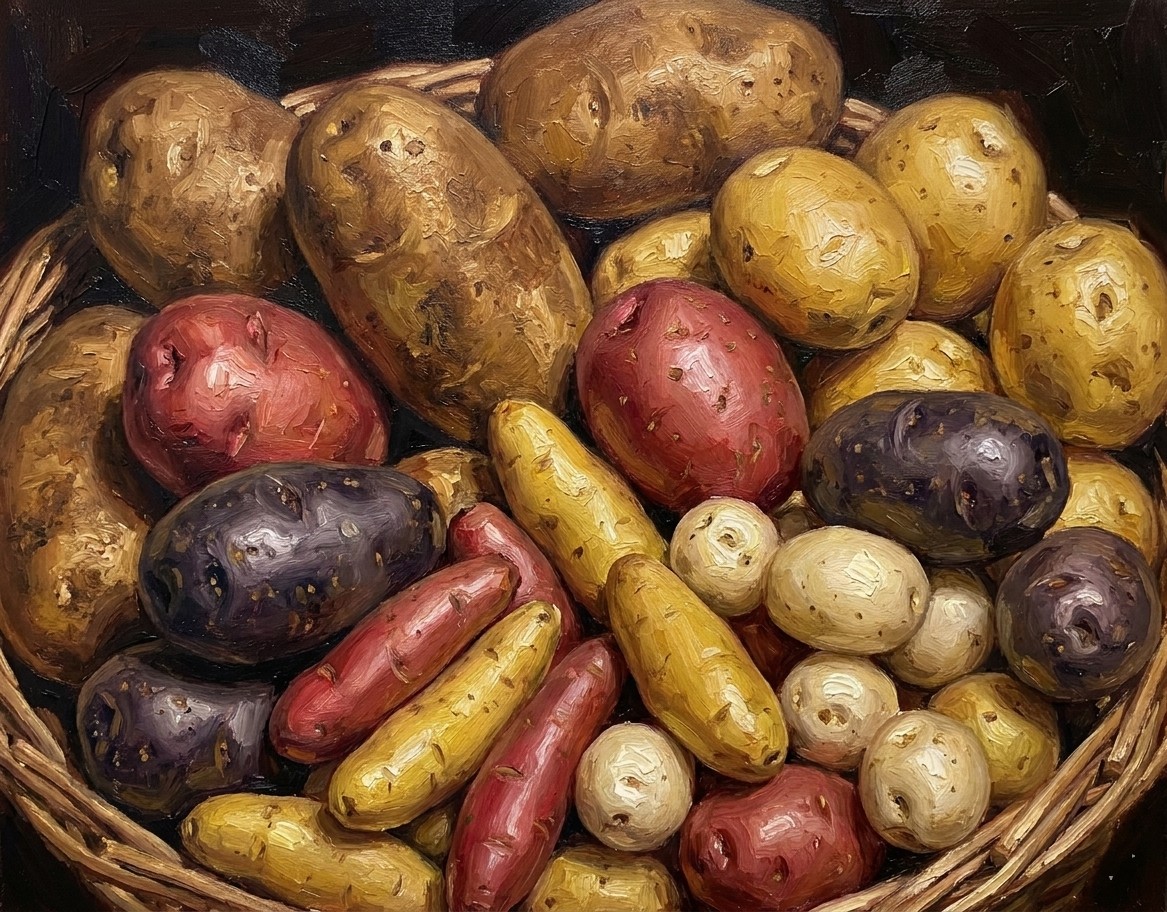
Flavour Profile
Mild, earthy and starchy with a natural sweetness when roasted.
Health Benefits
Potassium, vitamin C, slow-release carbs and proper fibre — most of it sitting in or just under the skin. Peel them and you throw half the nutrition in the bin. Leave the skin on whenever you can.
Buying Tips
Choose firm potatoes without green patches, sprouts or soft spots.
Storage
Store in a cool, dark place.
Not in the fridge and not beside onions.
Cooking Uses
Mash, roast, chips, wedges, soups, gratins, gnocchi and salads.
Forkin Food Theory
Not all potatoes are built the same.
Floury, high starch potatoes collapse into fluffy mash and crisp up into proper roasties.
Waxy potatoes hold their shape for salads, boiling and gratins.
Use the wrong one and your mash turns to glue or your potato salad turns to mush.
Wild & Wonderful
Waxy vs floury — this is the only category that actually matters. Specific variety names get marketed heavily but the cooking behaviour is what counts.
Waxy potatoes hold their shape: salads, gratins, anywhere you want defined slices or chunks. Floury potatoes fall apart: mash, baked, chips, roasties. All-rounders sit in the middle and do most jobs adequately, no job perfectly.
In the UK and AU the packet usually tells you "good for boiling" or "good for mashing/roasting". That's the signal to follow.
Green patches on potatoes are solanine, which is mildly toxic. Cut them off generously. A potato that's gone heavily green should go in the bin.
Never store potatoes in the fridge. Cold turns the starch into sugar, which makes them burn black when fried and taste sweet. Cool, dark, dry, ventilated — that's what they want.
Sprouting potatoes are still fine if firm. Just pop the sprouts off.