Onions
Flavour Profile
Sharp and pungent when raw. Sweet, rich and savoury when cooked.
Health Benefits
Fibre for the gut, vitamin C for the immune system, and a load of quercetin — a plant antioxidant linked to lower inflammation. Most of the good stuff sits just under the papery skin, so peel lightly and don't over-trim.
Buying Tips
Choose onions that feel heavy for their size with dry papery skins.
Avoid soft spots, mould or green shoots.
Storage
Store somewhere cool, dark and dry.
Keep them away from potatoes, which can encourage spoilage.
Cooking Uses
Soups, stews, curries, sauces, roasts, stir fries and just about everything else.
Forkin Food Theory
People think caramelised onions take ten minutes. They don't.
Real caramelised onions can take 30 to 60 minutes because you're slowly converting natural sugars into hundreds of flavour compounds.
Patience is the ingredient.
Wild & Wonderful
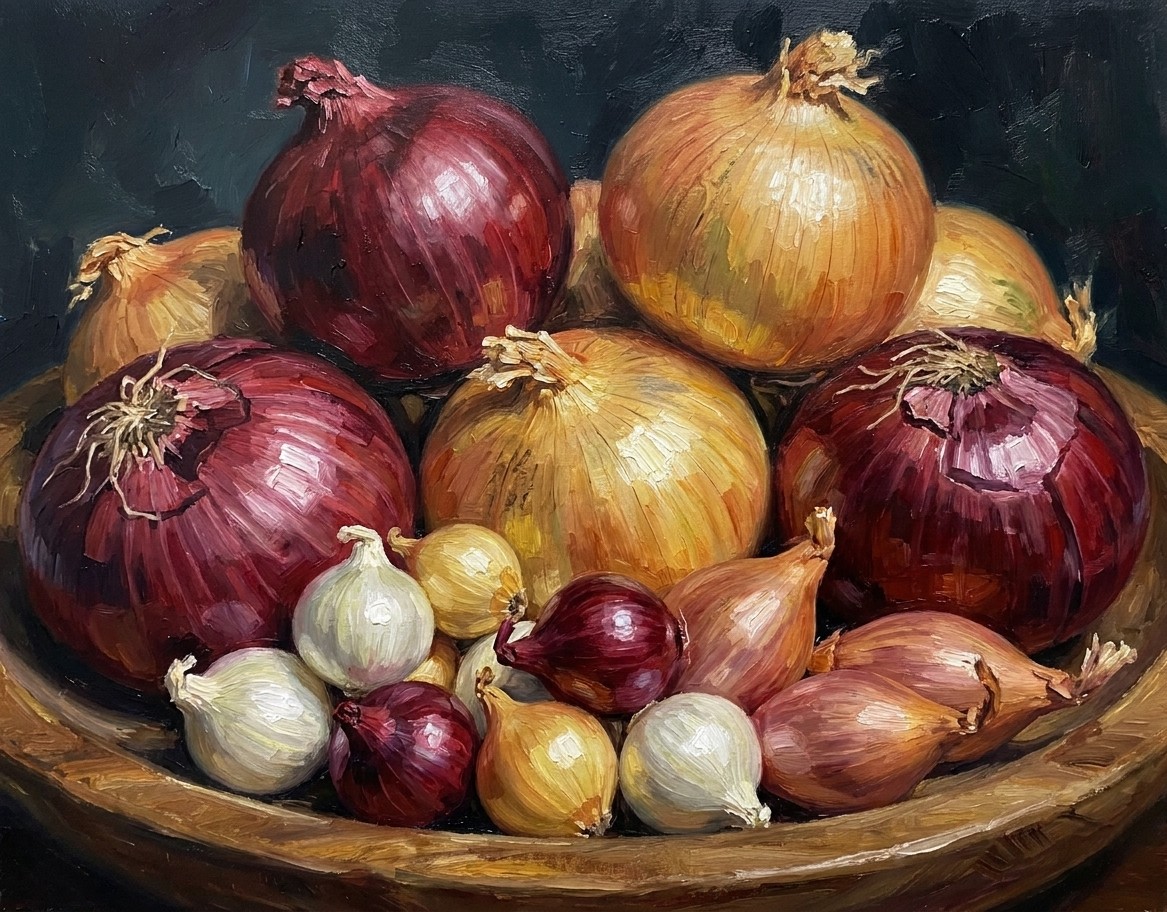
Brown, red, white, and spring onions aren't interchangeable.
Brown / yellow: the all-rounder for cooking. Sweet when caramelised, sharp raw. Red: milder raw, prettier in salads. Don't usually cook them — they lose their colour. White: sharper, less sweet, more pronounced. Mexican cooking, salsas. Spring onions / scallions / green onions: mildest, used raw or barely cooked, leaves and whites are different ingredients. Shallots: sweeter, softer, more delicate. The right onion for vinaigrettes and pan sauces.
The "crying when cutting" trick: a sharp knife (less cell damage releases less sulphur), and cutting near a flame or running cold water both help.
Properly caramelised onions take 30-45 minutes on low heat. The recipes that say "15 minutes" are lying. Real caramelised onions are sticky, jam-like, mahogany brown — not just softened.