Garlic
Flavour Profile
Sharp, spicy and pungent raw. Sweet, nutty and mellow when roasted.
Wild garlic — ramsons back home — is a different beast: milder, greener and more chive-like than the cultivated cloves. Closer to a fresh herb than a pungent bulb.
Health Benefits
Small hits of vitamin C, manganese and selenium, but the real story is the sulphur compounds. They're what make garlic smell like garlic, and they're what most of the health research is built on. Crush it and let it sit for ten minutes before cooking to keep the most of it intact.
Buying Tips
Choose firm bulbs with tight skins.
Avoid soft, damp or heavily sprouted bulbs.
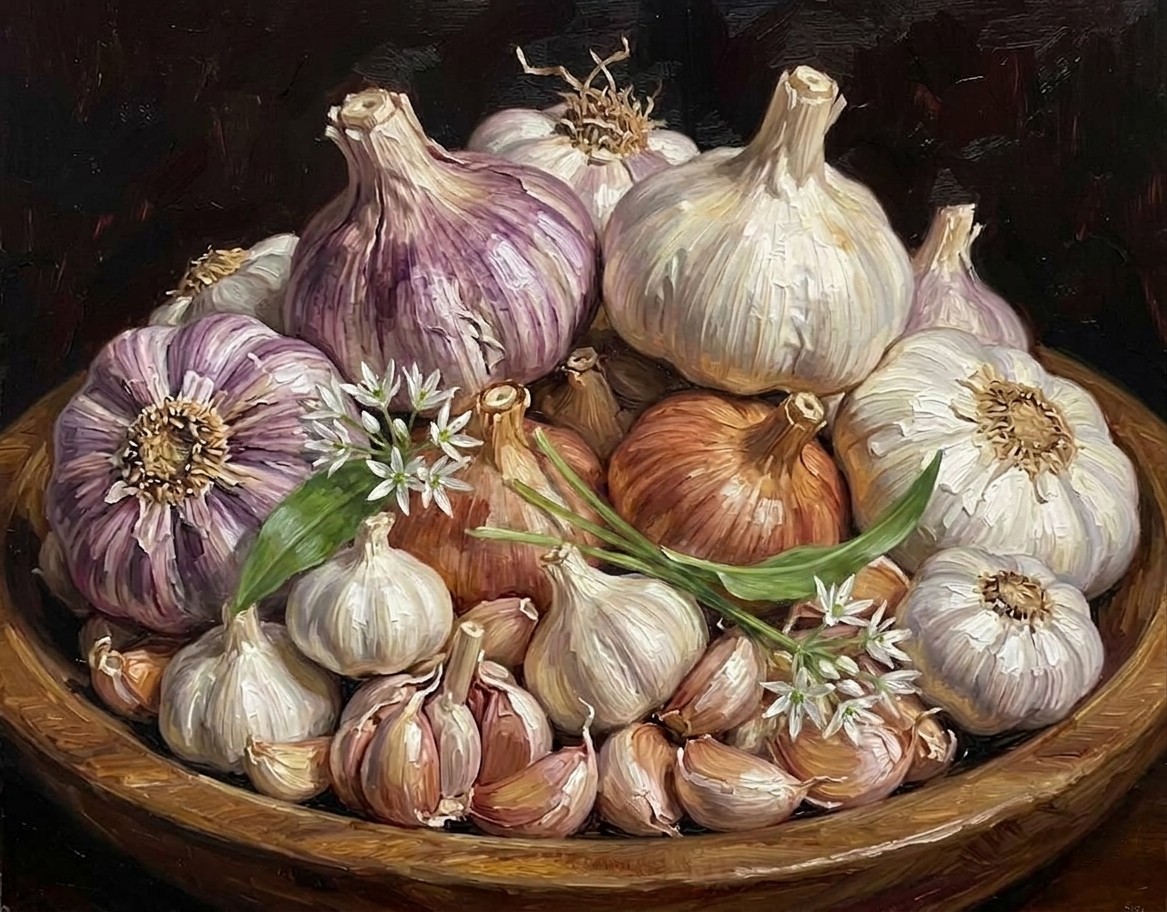
Foraging wild garlic (ramsons, Allium ursinum): it carpets the woodland floor across Britain from roughly March to May. If a woodland smells faintly of a Sunday roast, you're standing in it. Look for long, broad leaves and star-shaped white flowers on a single stalk. Crush a leaf between your fingers — if it smells unmistakably of garlic, you've got it. If it smells of nothing, walk away: lily-of-the-valley and autumn crocus grow in the same places and are seriously toxic. Pick leaves and flowers, leave the bulbs in the ground — sustainable picking keeps the patch coming back, and digging bulbs is illegal in many spots without the landowner's permission.
Storage
Keep whole bulbs in a cool, dry, well ventilated area.
Do not seal them in plastic.
Cooking Uses
Roasts, sauces, soups, marinades, curries, dressings and compound butters.
For wild garlic, the green parts shine: a rough pesto with toasted nuts and a hard cheese, stirred through scrambled eggs, folded into soft butter, wilted into soup at the last second, or blitzed into a green oil. The immature seed pods make decent capers too.
Forkin Food Theory
Garlic doesn't contain much flavour until you damage it.
Crushing or chopping garlic creates allicin, one of the compounds responsible for its characteristic aroma.
No crush, no magic.
Wild & Wonderful
Pre-minced jarred garlic is a different ingredient to a fresh bulb. It's been heated, treated with acid (usually citric or phosphoric), and oxidised. It tastes metallic, harsh, and tinny — and no amount of cooking fixes it.
Pre-peeled cloves in plastic tubs are fresher but already starting to fade.
A whole fresh bulb keeps for months in a cool dry place. Peel as you need it.
The green shoot through the middle of an older clove is bitter. Pull it out before using if it's there.
Burnt garlic isn't golden garlic gone slightly too far. It's bitter and ruins the dish. Always add garlic AFTER onions, not with them — onions take 5 minutes, garlic takes 30 seconds.
Black garlic is the same garlic, slowly fermented for weeks until it goes sweet, sticky, and tastes of dates and balsamic. A different ingredient entirely.
**A note from the glen**
Growing up in Scotland, we'd be out on our bikes all day up the glen. Packed lunches in the saddle bag, sun out, not a care in the world.
And that smell — wild garlic on the air, every spring, the whole length of the burn. It's one of those smells that doesn't leave you. I can still place it exactly: the cool of the trees, the bracken starting to come through, a sandwich in one hand and a bike thrown down in the other.
Wish I'd known back then it was edible. We'd have been making pesto on the riverbank.