Carrots
Flavour Profile
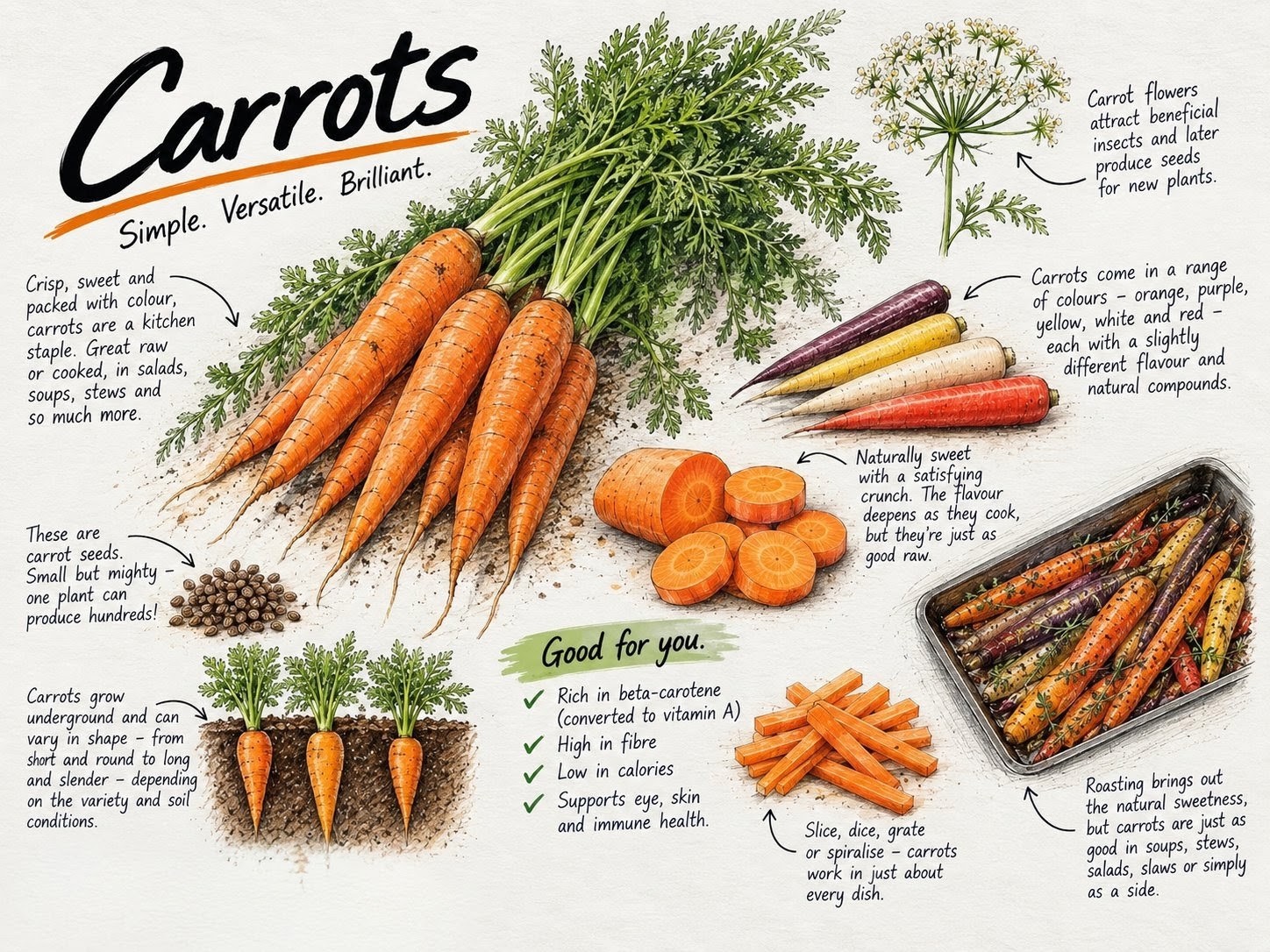
Earthy, sweet and woody. Carrots have a high natural sugar content that intensifies when heat is applied.
They provide a reliable sweetness that balances salty and acidic ingredients.
Health Benefits
HEALTH
Vitamin A for good eyesight and a robust immune system. And plenty of fibre, which is always a good thing for your gut.
Cooking carrots can make their beta-carotene easier for your body to absorb. Cook them until tender but still with a bit of bite. Overcook them and you just get mush, which is no fun for anyone.
Buying Tips
Look for firm, heavy carrots with high colour saturation. If the greens are still attached, they should be bright and snappy.
Avoid any that feel bendy or have large cracks. If they look hairy, they are likely old and trying to grow.
Storage
Keep them in the fridge. If you bought them with the leafy greens attached, cut those off immediately.
The greens act like a straw, sucking the moisture out of the root and making your carrots go floppy within days. Store the roots in a container or bag to keep them crisp.
Cooking Uses
The foundation of everything. Sauté them as part of a mirepoix, roast them whole with honey, or pickle them for crunch.
They are one of the few vegetables that work just as well in a cake as they do in a stew.
Forkin Food Theory
THEORY
Raw or cooked? Both have benefits. Cooking carrots breaks down their cell walls, making the beta-carotene easier for your body to absorb.
And that old line about carrots helping you see in the dark? It was pushed by British propaganda during WWII to help explain why RAF pilots were so good at spotting enemy aircraft at night. Carrots are good for normal vision, but they won’t give you night vision.
Wild & Wonderful
Supermarket carrots are bred for shelf life and uniform size, not flavour. A carrot from a farmer's market or a vegetable box scheme often tastes like a different vegetable — sweeter, more aromatic, less watery.
Purple, yellow, and white carrots existed long before orange. The orange ones are a Dutch breeding project from the 1600s. The coloured ones taste subtly different — purples are earthier, yellows milder.
The tops are edible and taste like a cross between carrot and parsley. Use them in pesto or stocks.
A limp carrot isn't ruined. Stick it in cold water for an hour and it'll crisp back up.