
Pumpkins
Flavour Profile
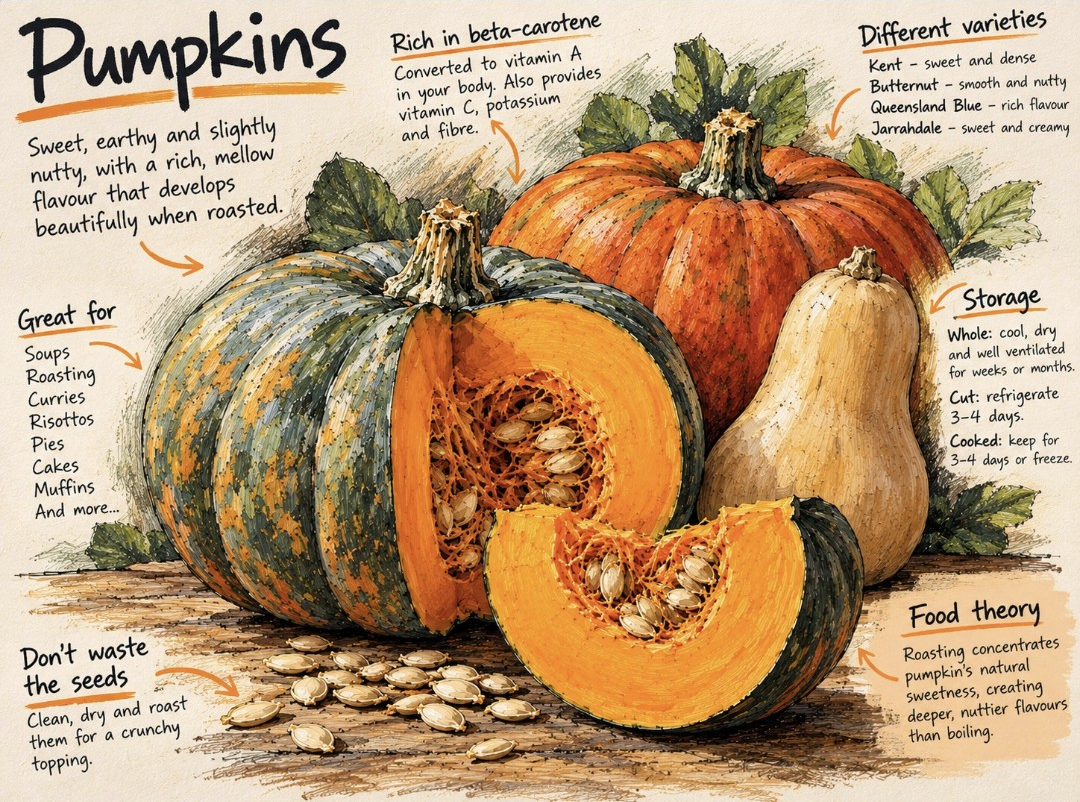
Sweet, earthy and slightly nutty, with a rich, mellow flavour that develops beautifully when roasted.
Pumpkin's natural sweetness works brilliantly with warming spices, chilli, ginger and savoury ingredients. The flavour varies between varieties, from the delicate sweetness of butternut to the richer, nuttier flesh of Kent and Queensland Blue.
Health Benefits
Pumpkin is packed with beta-carotene, the orange pigment your body converts into vitamin A to support normal vision and immune function.
It also provides vitamin C, potassium and dietary fibre, while being naturally low in fat.
Cooking softens the plant's cell walls, making beta-carotene easier for your body to absorb. Adding a little olive oil or butter helps even further because carotenoids are fat-soluble.
So that roasted pumpkin with a drizzle of olive oil isn't just delicious. There's a bit of nutritional science behind it too.
Buying Tips
Look for pumpkins that feel heavy for their size, with firm, hard skin and no soft spots, cracks or signs of mould.
A dry, corky stem is generally a good sign of maturity. Avoid pumpkins with damaged or soft stems, as these areas can encourage decay.
Kent (Jap Pumpkin): Dense, sweet orange flesh. A cracking all-rounder for roasting, baking, soups and mash.
Butternut: Smooth, sweet and slightly nutty. Excellent for soups, purées and baking.
Queensland Blue: Firm, dense flesh with a rich flavour. Brilliant for roasting and savoury dishes.
Jarrahdale: Sweet, golden-orange flesh with a smooth texture. Great for baking, soups and pies.
For cooking, choose varieties grown for flavour rather than the enormous orange pumpkins bred primarily for Halloween carving.
Storage
Store whole, mature pumpkins somewhere cool, dry and well ventilated, away from direct sunlight. Depending on the variety and condition, they can keep for weeks or even months.
Once cut, remove the seeds, cover the exposed flesh and refrigerate. Use within three to four days.
Cooked pumpkin can be refrigerated in an airtight container for three to four days or frozen for longer storage.
Don't wash a whole pumpkin before storing it. Excess moisture on the skin can encourage mould.
Cooking Uses
Roasted pumpkin, soups, curries, risottos, pasta, gnocchi, mash, pies, breads, cakes and muffins.
Roast wedges with olive oil, garlic and rosemary, or toss them with cumin, coriander and chilli for something with a bit more attitude.
Pumpkin also works beautifully with coconut milk, ginger, citrus, sage, brown butter and salty cheeses.
And don't throw away the seeds. Clean, dry and roast them for a crunchy topping.
Forkin Food Theory
Ever wondered why roasted pumpkin tastes richer than boiled pumpkin?
Pumpkin contains a considerable amount of water. When you boil it, some of its flavour compounds and soluble nutrients move into the cooking water. Throw that water away and you're throwing away flavour too.
Roasting works differently.
As moisture evaporates from the exposed surfaces, natural sugars and amino acids become more concentrated. Once the surface becomes hot and dry enough, browning reactions develop deeper, roasted flavours.
But there's a difference between roasting pumpkin in pieces and baking it whole.
Cut and roasted: More exposed surface means more moisture evaporation and greater opportunity for browning. Perfect for developing caramelised edges and a richer flavour.
Baked whole: The skin acts as a natural cooking vessel, trapping moisture and gently steaming the flesh from within. You get beautifully soft pumpkin without adding water.
That's why baking a whole pumpkin works so well for soup. You can cook your onions, garlic, ginger and spices inside the pumpkin itself, allowing the flavours to develop together before blending.
One more thing. Pumpkin's sweetness isn't created entirely by caramelisation. Much of it comes from sugars already present in the flesh. Roasting concentrates those flavours, while surface browning adds another layer of complexity.
Wild & Wonderful
Pumpkins are actually fruit.
Botanically speaking, pumpkins are fruit because they develop from flowers and contain seeds. In the kitchen, we treat them as vegetables.
Not all pumpkins are orange.
They come in shades of green, blue-grey, cream, yellow and orange. Some have smooth skins, others are deeply ribbed or covered in bumps. The colour of the outside doesn't necessarily tell you how sweet the flesh will be.
Those giant Halloween pumpkins aren't necessarily great eating.
Many carving varieties are bred for size, shape and relatively thin walls rather than dense, flavourful flesh. They're brilliant for carving faces into, but not always the best choice for dinner.
Pepitas aren't quite the same as ordinary pumpkin seeds.
The green pepitas sold in shops are shell-free pumpkin seeds, often from varieties grown with naturally hull-less seeds.
The seeds you scoop from most pumpkins have a pale outer shell. They're edible too, although the shell can be tough.
And pumpkin spice? There's usually no pumpkin in it.
It's a mixture of warming spices, commonly cinnamon, ginger, nutmeg, cloves and allspice, traditionally used to flavour pumpkin pie.
A final wee trick: if you're making pumpkin purée for baking, roasting rather than boiling generally gives you a thicker result with less excess moisture. That's particularly useful for cakes, pies and breads where too much water can ruin the texture.