
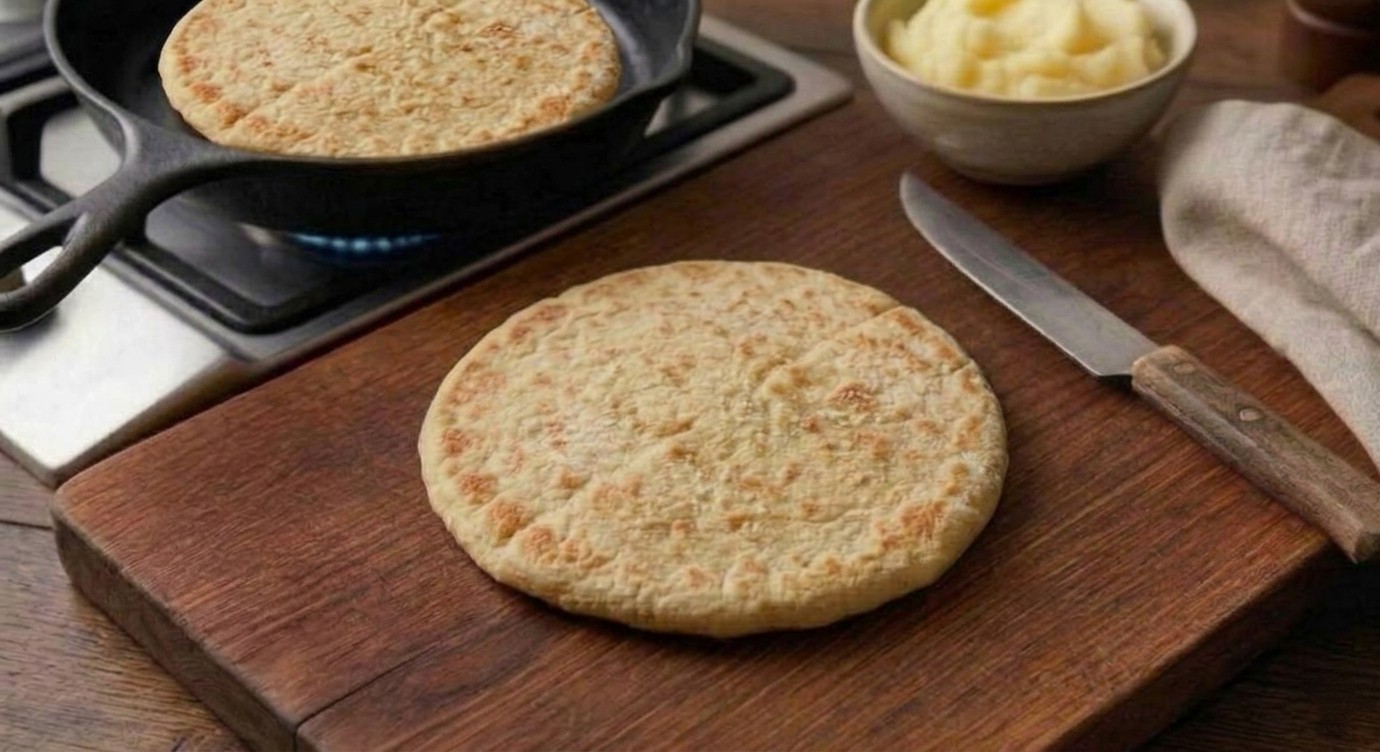
Traditional Tattie Scones
Roll the dough into a circle, fry it whole, then cut it into 4 quarters. That's the tattie scone.
Tattie scones are dead simple, but the mash matters. Leftover mash from dinner isn't ideal — it's usually loaded with milk, cream and butter, which makes a wet, sloppy dough that won't hold its shape or crisp up. Best to boil floury potatoes fresh, mash them plain with just a knob of butter and salt, then work from there. Roll the dough into one circle, dry-fry it whole, then cut the cooked round into 4 quarters.
Tattie scones are dead simple, but the mash matters. The sauce works because reduction concentrates flavour while gentle heat protects the aromatics and fat, giving a glossy finish instead of a split or harsh one.
- →Heat control decides texture. Push too hard and ingredients toughen or split; stay gentle where needed and the dish keeps its shape.
- →Fat carries flavour. Blooming spices, herbs or aromatics in fat spreads their flavour through the whole dish instead of leaving it patchy.
- →Acid and salt finish the job. A final taste-and-adjust is what turns cooked ingredients into a finished recipe.
- →Contrast keeps the plate interesting. Crunch, herbs, spice, creaminess or a sharp finish stops rich food becoming one-note.
Common Mistakes
- ✗Rushing the first stage. If the base has not built flavour, the finished dish has nothing to stand on.
- ✗Cooking everything at one heat. Browning, simmering, reducing and finishing all need different energy.
- ✗Forgetting to taste before serving. Salt, acid and texture change as water cooks off, so the final adjustment is not optional.
- ✗Serving without contrast. A soft or rich dish needs crunch, herbs, acid or heat to feel finished.
Tips & Tricks
- →Use plain mash, not creamy leftover mash. Milk, cream and butter from dinner turn the dough wet and sloppy — it won't hold its shape or crisp. Boil floury tatties fresh, mash plain, and go from there.
- →Floury potatoes only. Waxy potatoes make a wet, gluey scone that won't crisp.
- →Mix the flour in while the potato is still warm. Cold potato = tough dough.
- →No potato starch needed for this version — this is a simple round-fried tattie scone, not a foldable wrap.
- →Fry the round whole first, then cut it into 4 quarters. A tattie scone is a quarter of the cooked circle, not dough cut up before it hits the pan.
- →Leftover scones reheat brilliantly in a dry pan, or fry them in a bit of bacon fat for breakfast the next day.
- →Transfer the cooked scones to a clean tea towel and cover them as they cool. The trapped residual steam keeps them soft and stops them drying out — an old-school trick that leaves them in much better nick for storing, fridging or freezing before you fry them off later.
Flavour Twists
Add a small squeeze of lemon, lime or vinegar at the end. It lifts the fat and makes the seasoning taste cleaner.
Fold in a knob of cold butter, a spoon of cream or a splash of good oil off the heat for a glossier finish.
Finish with toasted crumbs, seeds, nuts or crisp onions so the dish has texture as well as flavour.
Substitutions
- Main vegetable→ Use a similar seasonal vegetable with the same cooking time.Hard roots need longer; leafy greens go in late.
- Finishing fat→ Butter, olive oil, sesame oil, coconut cream or crème fraîche.Pick the fat that matches the recipe's direction, then add it off the heat where possible.
- Crunch→ Toasted seeds, nuts, crumbs or crisp onions.Add at the table so the texture stays crisp.
Cooked scones keep 2 days wrapped in the fridge, or freeze flat between baking paper for up to 2 months. Reheat in a dry pan, 30 seconds a side.
Sharp greens and warm bread
A bitter green salad or quick vegetables on the side give lift, while warm bread catches any sauce left on the plate.
A tattie scone doesn't need reinventing. It needs eating.
Method
- 1
Start with plain warm mash
Boil floury potatoes, drain well and let the steam dry off for a minute, then mash plain — no milk, no cream, just a knob of butter and salt going in at the mixing stage. If you're using leftover mash, only do it if it was kept plain; the usual milk-and-butter dinner mash will give you a sloppy dough. Work with it while it's still warm — cold potato fights the flour and goes tough.
- 2
Mix
Add the melted butter and salt to the warm potato. Sift in the flour and bring it together with your hands until just smooth. Don't overwork it — gluten is the enemy of a tender scone.
- 3
Roll into a circle
Tip onto a floured board and roll or press the dough into one round, about 5 mm thick. A 20 cm circle is about right.
- 4
Dry-fry whole
Heavy pan, medium heat, no oil. Fry the whole circle for 2 to 3 minutes per side until golden brown spots appear and the dough is set through.
- 5
Cut into quarters
Move the cooked round to a board and cut it into 4 even quarters. Each quarter is a tattie scone.
- 6
Serve
Hot, with butter melting into them. Or alongside bacon and eggs. Or fried again the next morning in a bit of bacon fat — possibly the best version of all.
Cook with it
Related recipes
Leave a comment
Drop your name, email and a note — I read every one.