
Turmeric
Flavour Profile
Earthy, peppery and a wee bit bitter, with a warm mustard-like heat in the background.
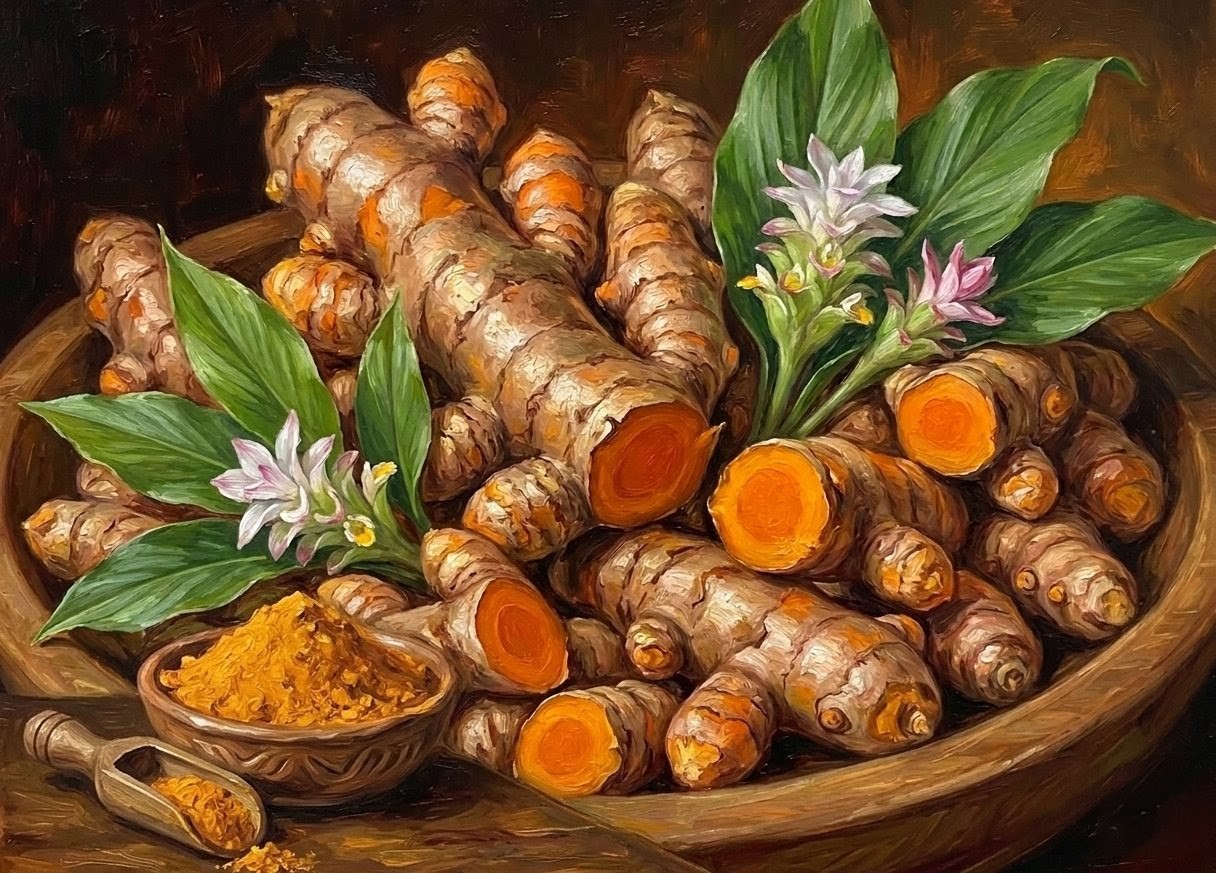
Fresh turmeric is brighter and greener — closer to ginger with a citrus edge. Dried ground turmeric is deeper, dustier and more savoury. Same root, two different beasts.
Health Benefits
Curcumin is the headline act. Anti-inflammatory, good for the joints, and there's decent research behind it for gut and brain health too.
Two things to know: curcumin is fat-soluble and it's shy on its own. Cook it in a bit of oil or butter, and add a crack of black pepper. The piperine in the pepper bumps absorption massively. No fat, no pepper, no magic.
Buying Tips
Fresh: look for firm rhizomes with tight skin, no soft spots. Snap one — it should break cleanly and stain your fingers bright orange straight away.
Dried ground: buy small tins from a shop that turns its stock over. Old turmeric goes flat and dusty fast. It should smell warm and peppery in the jar, not like nothing.
Storage
Fresh root: wrap in paper and keep in the fridge crisper for a couple of weeks. For longer, throw it in the freezer whole — it grates better frozen anyway, and you skip the orange fingers.
Dried ground: airtight jar, cool dark cupboard, away from the cooker. Replace every six months or it's just orange dust.
Cooking Uses
Fresh: grate into curries, dals, stir-fries, dressings and juices. Treat it like ginger — a little goes a long way.
Dried: bloom it in warm oil or ghee for thirty seconds before anything else hits the pan. That step is the difference between turmeric tasting like something and turmeric tasting like sawdust.
Rough swap: 1 teaspoon dried ≈ a 2.5cm piece of fresh.
Fair warning — it stains everything. Boards, tea towels, grout, fingernails. Wipe spills straight away.
Forkin Food Theory
Curcumin is fat-soluble and heat-activated. Cold turmeric stirred into a smoothie at the end is mostly for colour.
Bloom the spice in warm fat and the curcumin dissolves into the oil, ready to coat everything in the pan. Add a crack of black pepper and piperine quietly multiplies how much your body actually absorbs.
Fat, heat, pepper. Three small moves, and turmeric stops being a yellow garnish and starts doing actual work.
Wild & Wonderful
Turmeric has been used in India for thousands of years — kitchen, medicine cabinet and dye pot all in one. It's the colour of monks' robes and the colour of a good korma for a reason: same plant.
It rode the spice routes west centuries ago and somehow still feels exotic in a Scottish kitchen. It shouldn't. It belongs in a soup, a roast tray of vegetables and a mug of warm milk just as much as it belongs in a curry.