
Salmon
Flavour Profile
Rich, oily, and mildly sweet. Unlike white fish, salmon has a distinctively savoury and buttery depth that stands up to strong seasonings.
The high fat content gives it a silky mouthfeel that coats the palate.
Health Benefits
Salmon is packed with omega-3 fats, which are good for your heart. You'll also get plenty of protein and vitamin D, great for strong bones and a solid immune system. Eat the skin — it's full of these beneficial fats.
Buying Tips
Look for firm flesh that springs back when pressed. Avoid any fish that smells "fishy" or has liquid pooling in the tray.
If buying fillets with skin on, the skin should be bright and silvery, not dull or grey. Wild-caught salmon is leaner and deeper in colour, while farmed salmon is fattier with more visible white marbling.
Storage
Keep it in the coldest part of the fridge and cook it as soon as possible, ideally within 24 hours of purchase.
If you aren't cooking it today, wrap it tightly and freeze it. To maintain the texture, defrost it slowly in the fridge overnight rather than using a microwave.
Cooking Uses
Salmon is versatile. You can pan-fry it for crispy skin, poach it for a soft texture, or roast it for an easy dinner.
It handles bold flavours like ginger, soy, and chilli, but is just as good with lemon and herbs. Don't overcook it. It is best served when the centre is still slightly translucent and flaky.
Forkin Food Theory
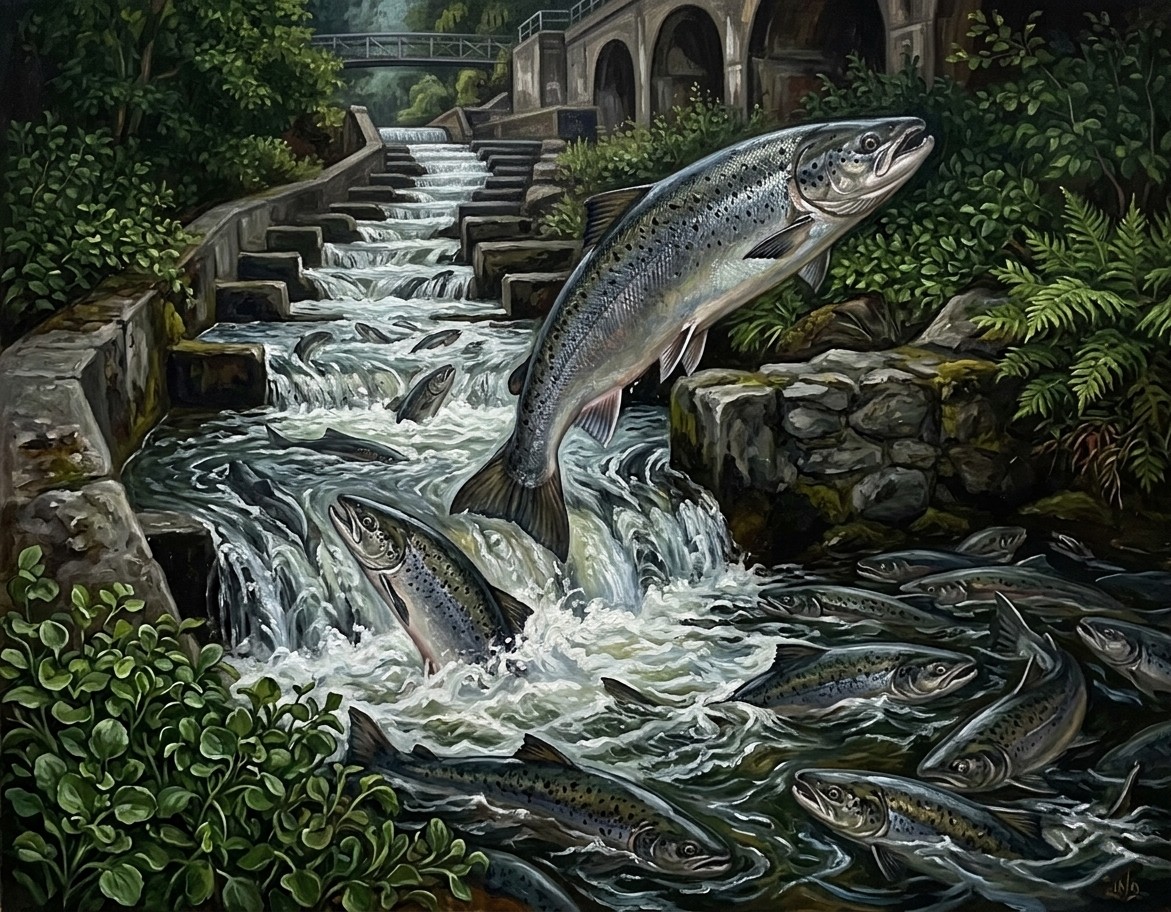
White fish have "fast-twitch" muscles for quick bursts of speed, which stay white when cooked. Salmon have "slow-twitch" muscles designed for long-distance migration.
These muscles are powered by fat and a red antioxidant called astaxanthin, which the salmon gets from eating krill and plankton.
This combination of high fat and natural pigment is exactly why salmon tastes richer and looks pinker than almost any other fish in the sea. It's built for the long haul, and that endurance is what creates the flavour.
Wild & Wonderful
Wild vs farmed is the big one. Wild salmon (Pacific, Alaskan, Scottish wild) is leaner, deeper coloured naturally from its diet of krill and crustaceans, and tastes more pronounced. Farmed salmon (most of the salmon in supermarkets) is fattier, milder, and the pink colour comes from astaxanthin added to the feed — without it, the flesh would be grey.
This isn't a moral lecture — both have a place. But they cook differently. Farmed salmon's higher fat content means it's more forgiving of slight overcooking. Wild salmon goes from perfect to dry in 30 seconds and wants quick, hot cooking.
The white stuff that oozes out when salmon cooks is albumin — coagulated protein, perfectly normal. You see more of it when the fish is cooked from cold and at high heat. Bring it to room temperature first and cook it gentler to minimise it.
Pin bones run down the centre of a fillet. Run your fingers against the grain to find them, pull them out with tweezers. Most pre-portioned supermarket fillets still have them.