
Pecorino Romano
Flavour Profile
Sharp, salty, and unapologetically punchy. Made from sheep's milk, it carries a tangy, almost gamey edge that cow's milk cheeses just can't match.
Saltier and more aggressive than Parmesan, which is exactly the point in a proper cacio e pepe or carbonara.
Health Benefits
Good source of calcium and protein. Sheep's milk is naturally higher in fat and protein than cow's milk, so the cheese is dense in both.
Aged, so very low in lactose. Salt content is high though, so go easy if you're watching sodium.
Buying Tips
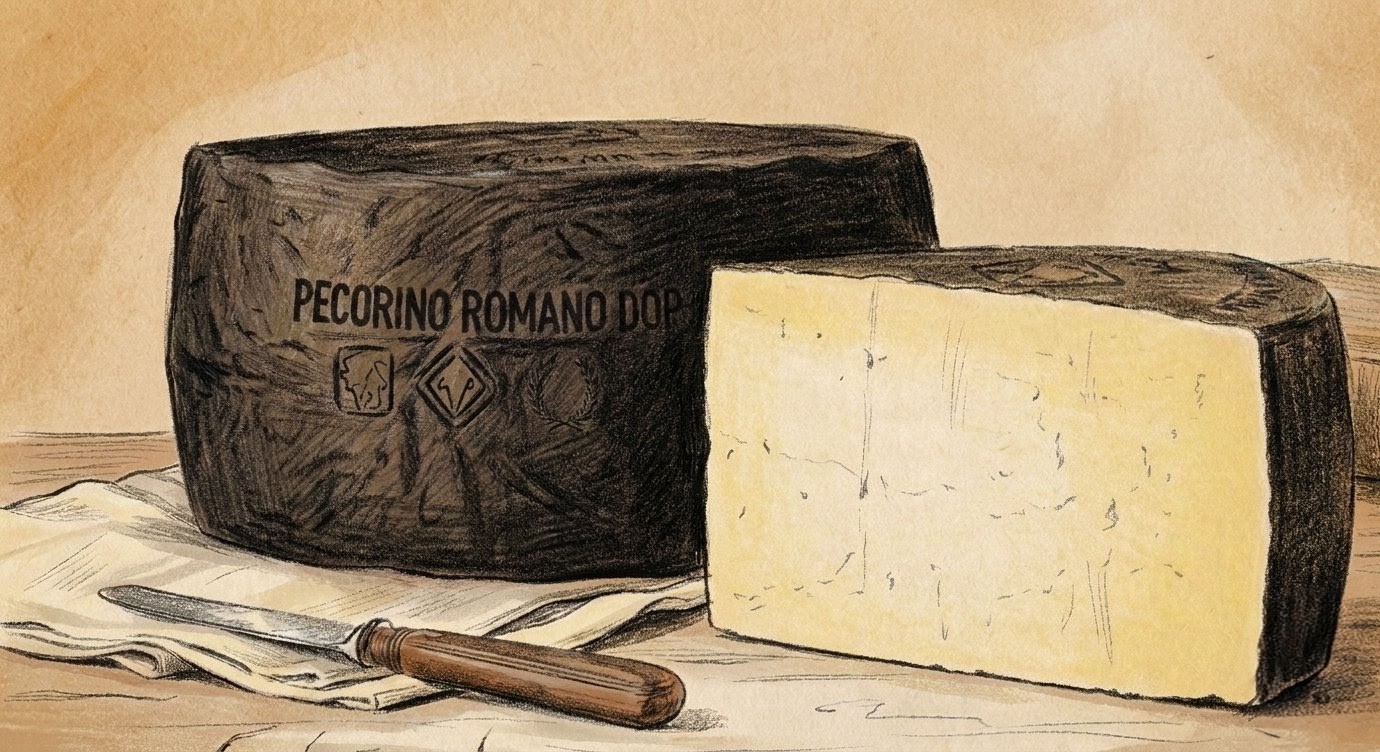
Look for Pecorino Romano DOP on the rind. It's only made in Lazio, Sardinia, or the province of Grosseto.
Buy it as a block. Pre-grated tubs lose the sharp edge fast and often pad it out with cheaper cheese.
Storage
Wrap in parchment or wax paper, then loosely in foil. Keep it in the coldest drawer of the fridge.
A proper block will keep for weeks. If it gets a bit of surface mould, just trim it off and carry on.
Cooking Uses
Cacio e pepe, carbonara, amatriciana. The Roman pasta dishes are built around it.
Also brilliant grated over roasted vegetables, stirred through breadcrumbs for a crust, or shaved into a salad with broad beans.
Forkin Food Theory
Sheep's milk has nearly twice the fat and protein of cow's milk by volume.
That's why Pecorino tastes more intense than Parmesan, even when aged for less time. There's just more flavour-carrying material per bite.
It's also why Pecorino emulsifies so well into pasta water — those fats and proteins do the work of binding sauce to noodle.
Wild & Wonderful
Roman legionnaires were given a daily ration of Pecorino as part of their pay. About 27 grams a day, alongside bread and wheat.
It travelled well, kept for months, and packed serious calories. Pecorino literally fuelled an empire.
The name just means "sheep cheese" in Italian. Pecora is sheep.