
Mozzarella
Flavour Profile
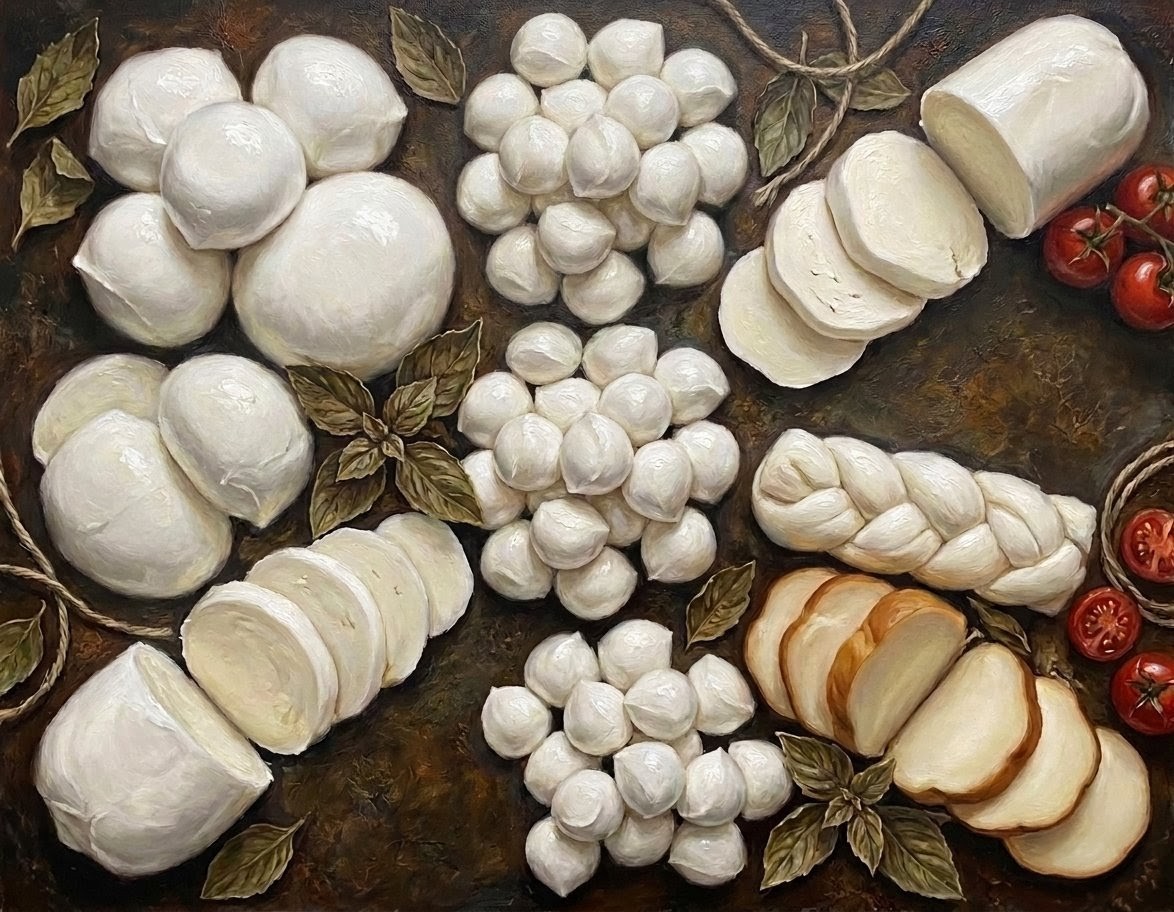
Mild, milky and clean. Fresh mozzarella is soft and bouncy with a delicate floral tang. It is the polite guest of the cheese world—it does not hog the spotlight, it just makes everyone else look better.
Health Benefits
Mozzarella gives you good calcium for strong bones and teeth. You'll also get vitamin B12, which helps your body turn food into energy and keeps your immune system running. Honestly, though, you're eating mozzarella because it's creamy and delicious, not for the vitamins.
Buying Tips
The best mozzarella is sold in a bag of whey or brine. If it is dry and vacuum-packed, it is low-moisture mozzarella, which is great for melting but lacks the creamy texture of the fresh stuff.
Look for Buffalo Mozzarella (Mozzarella di Bufala) for a richer, more complex taste. Check the use-by date; this is a cheese that does not get better with age.
Storage
Keep fresh mozzarella in its liquid until the moment you use it. If you have leftovers, store them in a sealed container with the original brine.
Try to eat it within two or three days of opening. Once it goes slimy or smells sour, it is past its prime.
Cooking Uses
Tear fresh mozzarella onto pizzas or pasta at the very last second so it softens without losing its milky soul.
Slice it with tomatoes and basil for a Caprese salad, or coat cubes in breadcrumbs and deep-fry them for the ultimate melty snack. If you are baking a lasagna, stick to the low-moisture blocks to avoid a watery mess in the oven.
Forkin Food Theory
The magic of mozzarella is in the stretch, and the stretch is all about the pH level during production.
As the cheese is made, the curds are heated and stretched in hot water—a process called 'pasta filata'. If the acidity isn't exactly right, the protein structures won't align.
When the pH is perfect, the proteins form long, elastic strands. This is why mozzarella provides that iconic cheese-pull while other cheeses just crumble or break.
Wild & Wonderful
Two completely different cheeses share the name.
Fresh mozzarella, sold in water or whey, is for eating cold or barely warmed. Buffalo mozzarella (mozzarella di bufala) is the proper version, made from buffalo milk, soft and faintly grassy.
The yellow block sold for pizza is low-moisture mozzarella, designed to melt and brown without going watery. Use one for the other and you'll be disappointed both ways.
If fresh mozzarella squeaks against your teeth and tastes of nothing, it's a few days too old.