
Lentils
Flavour Profile
Earthy, nutty and mild. They are sponges for flavour.
On their own, they are humble and savoury, but they excel at carrying heavy spices, bright citrus and salty fats.
Health Benefits
Lentils are full of fibre, so they're good for your gut. They're also a decent source of plant protein, iron to move oxygen around, and B vitamins that help you get energy from your food. Nothing fancy, just honest, solid nutrition.
Buying Tips
Dried lentils are the best value, but tinned lentils are the ultimate weeknight shortcut.
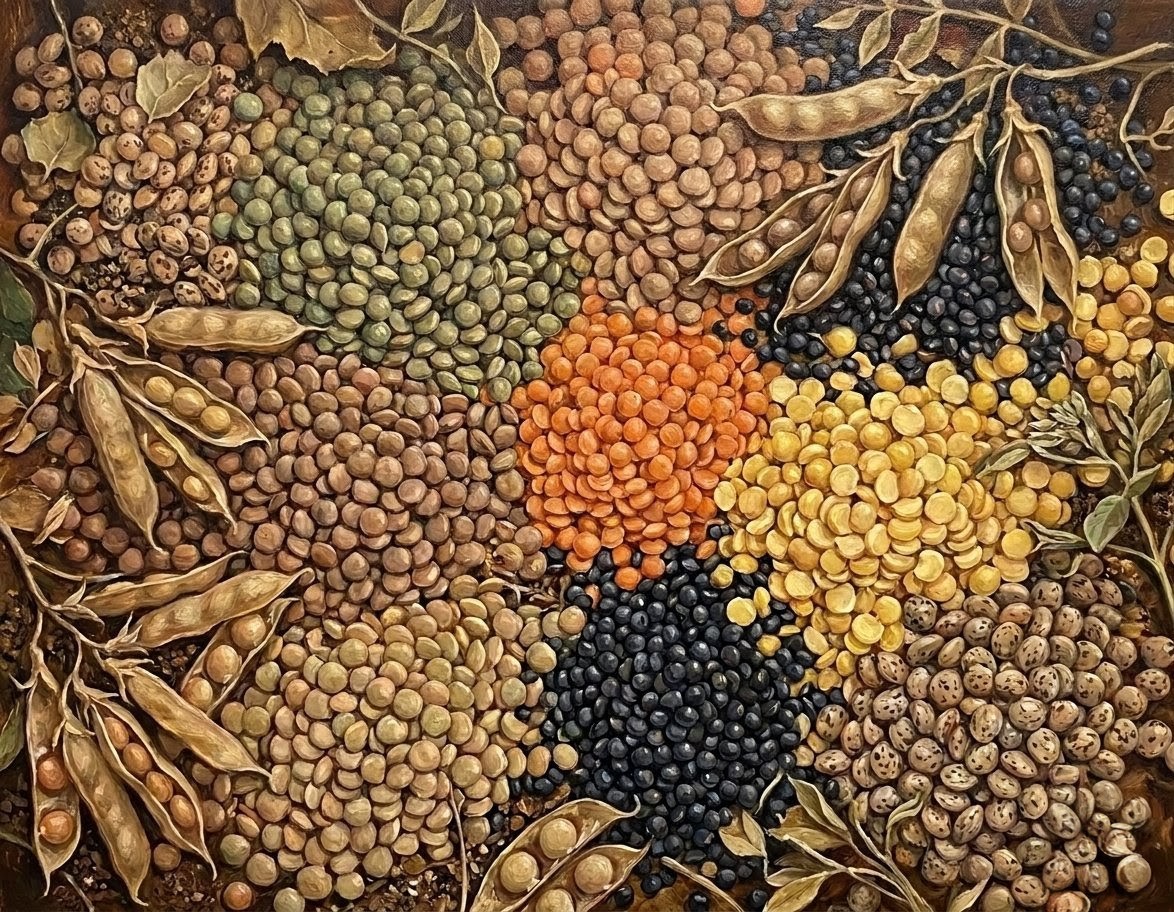
If buying dried, look for Puy or Beluga lentils if you want them to hold their shape. Red lentils are for when you want them to disappear and thicken a dish.
Avoid dusty packets or lentils that look faded—it's a sign they’ve been sitting on the shelf for years and will take forever to soften.
Storage
Store dried lentils in an airtight container in a cool, dark cupboard. They will last for years, though older lentils take longer to simmer.
Once cooked, they’ll stay fresh in the fridge for about five days. Unlike pasta, they actually freeze and defrost beautifully.
Cooking Uses
Rinse them first. Always.
Use red lentils for dahls, soups and thickeners. Use brown, green or black lentils for salads, stews or as a mince substitute in a Bolognese.
Don't salt the water at the very start of cooking; it can toughen the skins. Salt them towards the end.
Forkin Food Theory
Lentils are the great culinary camouflage.
Because they are roughly the same size and texture as minced meat once cooked, you can swap out half the beef in a ragu for brown lentils.
You aren't just saving money or being healthy; the lentils actually absorb the fats and juices from the meat that usually get drained away.
It makes the sauce richer and the flavour deeper. It’s not a compromise; it’s an upgrade.
Wild & Wonderful
Different lentils, different jobs.
Green and Puy lentils hold their shape — salads, side dishes, anything where you want texture.
Red and yellow split lentils collapse into a puree — dhal, soups, thickening stews. They cook in 15-20 minutes with no soaking.
Brown lentils are the all-rounder, somewhere between the two.
Don't salt lentils heavily at the start — like beans, the skins can toughen. Salt them once they're nearly done.
Unlike beans, lentils don't need soaking. Rinse, simmer, eat.