
Kidney Beans
Flavour Profile
Deeply earthy with a mild sweetness. They have a dense, creamy interior once cooked and a slightly nutty finish.
Because they are relatively neutral, they act as a sponge for bold spices, citrus and vinegars.
Health Benefits
Plenty of protein and fibre for your gut. You'll also get iron for moving oxygen around and magnesium for energy — useful for when you've had a long day.
Buying Tips
Look for shiny, unbroken skins if buying dried. For tinned versions, check the label for 'no added salt' to keep control over your seasoning.
Avoid cans with deep dents or bulging lids. Quality matters less if you’re mashing them into a dip, but for salads, you want a brand that holds its shape without turning to mush.
Storage
Keep dried beans in an airtight container in a cool, dark cupboard. They will last for years, though older beans take much longer to soften.
Once a tin is open, move any leftovers to a separate container. Don't store them in the open tin in the fridge, or they'll pick up a metallic taste.
Cooking Uses
Absolute staples for chilli con carne, minestrone and taco fillings. They have a sturdy texture that holds up well during long, slow simmers.
Don't be afraid to mash them into burgers or blitz them into a smooth, earthy dip with some olive oil and cumin. They are also brilliant at soaking up the juices in a cold bean salad.
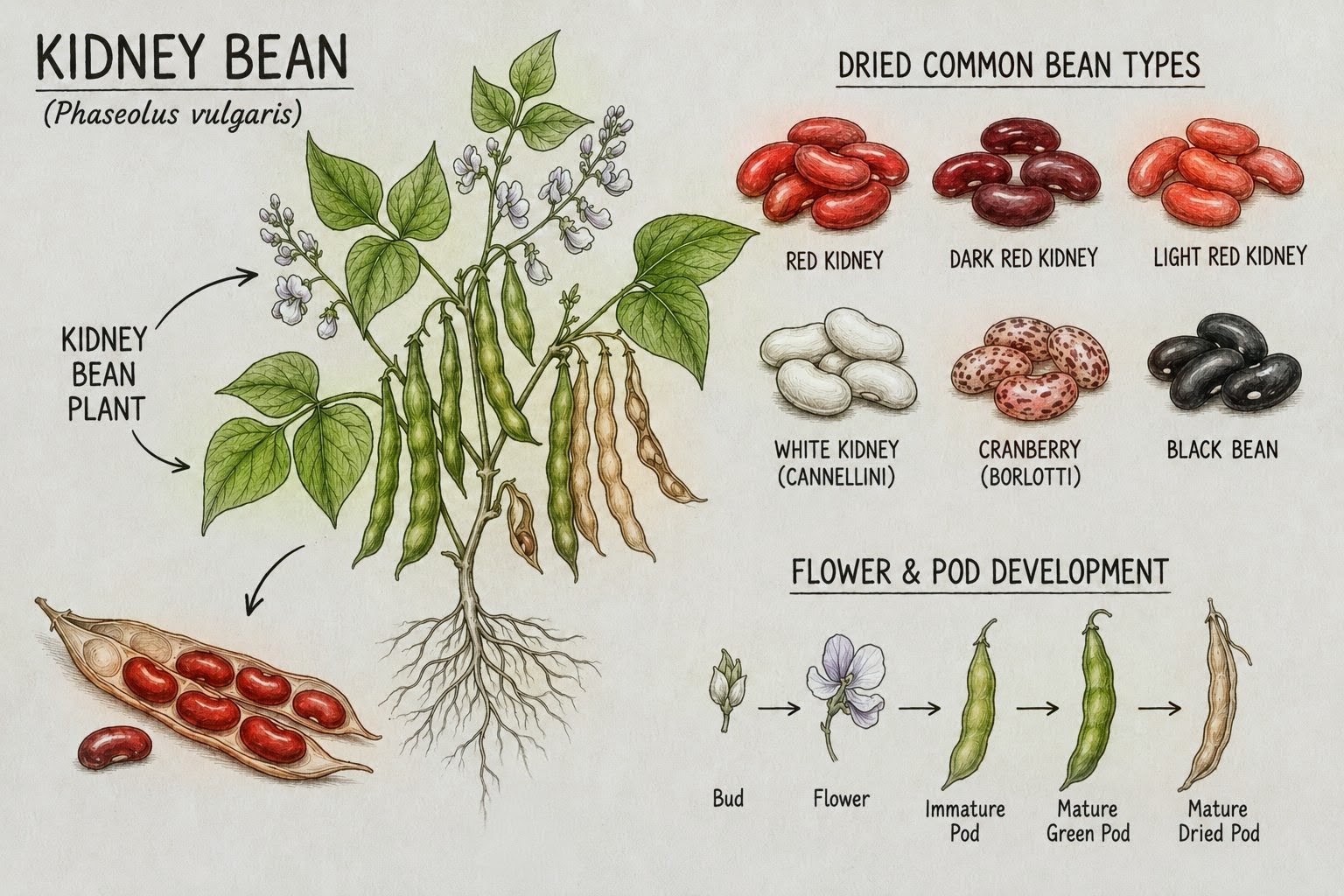
Although kidney beans share a botanical species (Phaseolus vulgaris) with black, pinto and navy beans, chefs still treat them as different ingredients because their texture, flavour and cooking behaviour vary.
Forkin Tip: Once you understand that many of these beans come from the same species, choosing substitutes becomes much easier. If your supermarket has run out of kidney beans, another common bean such as black, pinto or navy beans will usually work. The texture and flavour will change slightly, but most soups, stews, chillies and casseroles will still turn out great.
Forkin Food Theory
Kidney beans are one group within the common bean species, Phaseolus vulgaris.
Pinto, black, navy, Great Northern and cranberry beans, also called borlotti beans, belong to the same species, but they are different bean types, not kidney bean varieties.
Common kidney bean types include: - Dark Red Kidney - Light Red Kidney - White Kidney (Cannellini) - Speckled Kidney, a name used for speckled kidney-shaped types sold in some regions
These bean types developed over thousands of years through domestication, farmer selection and later plant breeding.
In the kitchen, we treat them as different ingredients because their flavour, texture and cooking behaviour vary.
Same species doesn't mean same bean.
Wild & Wonderful
Raw or undercooked kidney beans are no joke. They naturally contain a lectin called phytohaemagglutinin, which can cause food poisoning when dried kidney beans are not prepared properly.
If you're using dried kidney beans: - Follow the preparation instructions on the packet. - If no instructions are provided, soak the beans in plenty of water for at least 5 hours. - Drain and discard the soaking water. - Rinse the beans and cover them with fresh water. - Bring them to a full boil and boil for at least 30 minutes. - Continue cooking until completely tender.
Never rely on a slow cooker alone to cook dried kidney beans from raw.
Tinned kidney beans are already cooked. Drain them, rinse if you want, and use them cold or heat them through.