
Chicories
Flavour Profile
Chicories bring a clean, deliberate bitterness with crisp textures and earthy, nutty flavours.
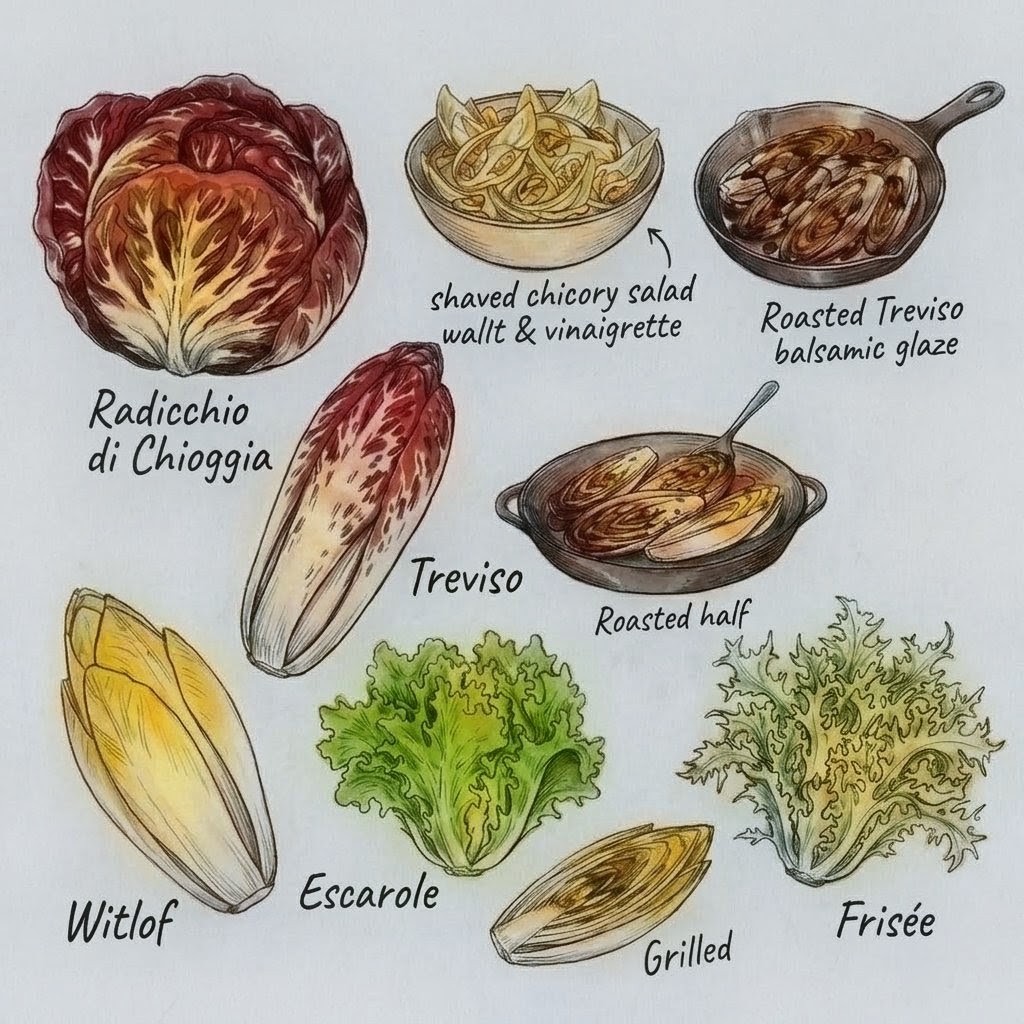
Radicchio is firm, juicy and boldly bitter. Witlof has tightly packed, pale leaves with a clean, delicate bitterness. Frisée is fine, frilly and grassy, while escarole has broader leaves and a milder flavour.
Health Benefits
Chicories are mostly water and low in kilojoules. They provide vitamin K, which supports normal blood clotting and bone health, along with fibre and folate.
Red radicchio also contains anthocyanins, the pigments responsible for its deep red and purple colour. Nutrient levels vary between the different varieties.
Buying Tips
Choose radicchio with crisp, richly coloured leaves and firm white ribs. Round Chioggia radicchio should feel compact, while Treviso naturally has a longer, looser shape.
Witlof should have a firm, tightly packed head with cream-coloured leaves and pale yellow tips.
Frisée and escarole should have crisp leaves and fresh-looking centres.
Storage
Store whole chicories in the crisper drawer inside a loose bag or wrapping that reduces moisture loss. Keep the leaves dry and wash them under cool running water just before using.
Store Witlof away from light to preserve its pale colour and delicate flavour.
Dry separated leaves thoroughly and keep them in a covered container with a dry paper towel or clean tea towel to absorb condensation.
Cooking Uses
Serve chicories raw in salads with citrus, pears, apples, nuts, blue cheese, feta or Parmesan.
Radicchio can be grilled, roasted, braised or sautéed and works beautifully in risotto, pasta, pizza and bean dishes.
Witlof can be braised, baked, grilled or separated into crisp cups for canapés.
Frisée is traditionally paired with bacon, poached eggs and warm dressing, while escarole works well in soups, stews and dishes with white beans.
Forkin Food Theory
The characteristic bitterness comes mainly from natural compounds called sesquiterpene lactones, including lactucin and lactucopicrin.
Salt reduces the perception of bitterness, fat softens the mouthfeel and sweetness creates balance. Grilling and roasting add browned, caramelised flavours that round out the sharper edges.
Brief blanching also softens the leaves and mellows their bitterness.
Wild & Wonderful
Radicchio comes in several distinct forms. Chioggia is the familiar round, deep-red head. Treviso is long and upright, while Castelfranco has soft cream leaves speckled with red, pink and burgundy.
Witlof is grown by forcing chicory roots to produce new heads in darkness. This creates the tightly packed, pale leaves known as chicons.
Frisée and escarole are two forms of endive. Frisée has narrow, curly leaves, while escarole has broad, smoother leaves and a gentler bitterness.
Cool growing conditions help deepen the red and purple colour of many radicchio varieties.