
Cheddar
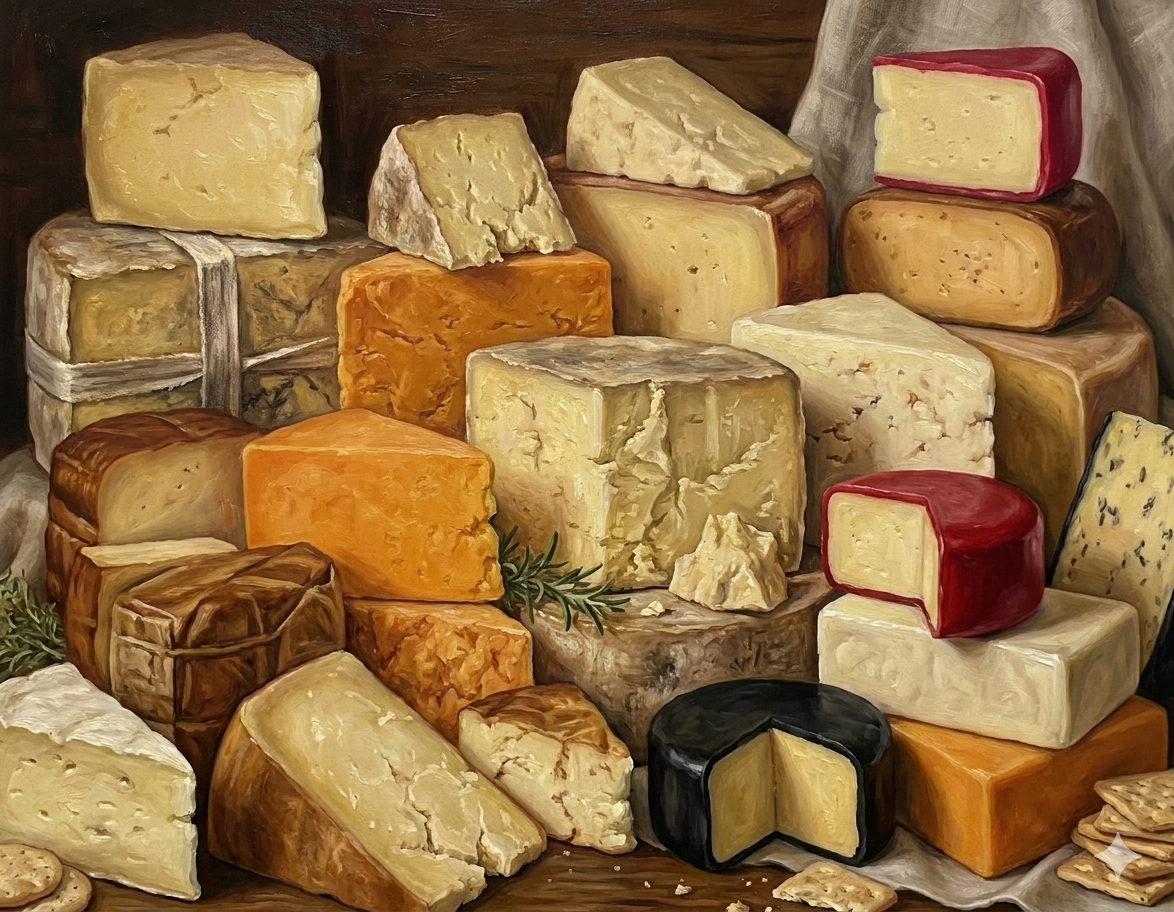
Flavour Profile
Rich, nutty and distinctly sharp.
As it ages, it moves from creamy and mild to a complex, tangy profile with a lingering savoury finish.
Cheddars with age often develop tiny, crunchy crystals that pop with saltiness.
Health Benefits
Calcium for strong bones and teeth, and vitamin A for the immune system. Cheddar is fermented, so your gut's already done some of the work breaking down the proteins. That means it's easier to digest for many than straight milk.
Buying Tips
Look for 'vintage' or 'extra mature' labels if you want a crumbly texture and punchy flavour.
Avoid anything labelled as 'processed cheddar' or 'sandwich slices' unless you're after a rubbery texture that won't melt properly.
A good cheddar should feel firm and look slightly matte, not shiny or oily.
Storage
Keep it wrapped tightly in wax paper or parchment, then a layer of cling film.
This lets the cheese breathe without drying out or absorbing the 'fridge smell'.
If a small spot of surface mould appears on a hard block of cheddar, you can usually just hack it off. The rest of the block is still perfectly fine to eat.
Cooking Uses
The ultimate all-rounder.
It melts beautifully into sauces, gratins and toasties.
Grating it yourself is always better than buying pre-shredded packs, which are often coated in potato starch that messes with the melt.
It also provides a sharp contrast when served with fruit like apples or grapes.
Forkin Food Theory
Those little white crunchy bits you find in aged cheddar aren't salt. They are calcium lactate crystals.
As the cheese ages and moisture is lost, the lactic acid and calcium bind together to form these tiny gems.
Many people think the cheese has gone bad or is 'gritty', but for a chef, those crystals are a badge of honour.
They are the definitive sign that the cheese has been aged properly and will have a massive, deep flavour.
Wild & Wonderful
"Mature" on a UK or AU label means almost nothing. There's no legal standard. A 6-month "mature" block can sit next to a 24-month "mature" block at the same price.
Proper cheddar is block-aged, often cloth-bound, and develops crunchy little crystals as it gets older. Those crystals are a good sign, not a fault.
Pre-shredded cheddar is coated in cellulose or potato starch to stop it clumping. It melts badly and tastes flat. Grate your own.
If the colour is bright orange, it's been dyed with annatto. That's tradition in some regions, not a quality marker either way.