
Capsicums / Peppers
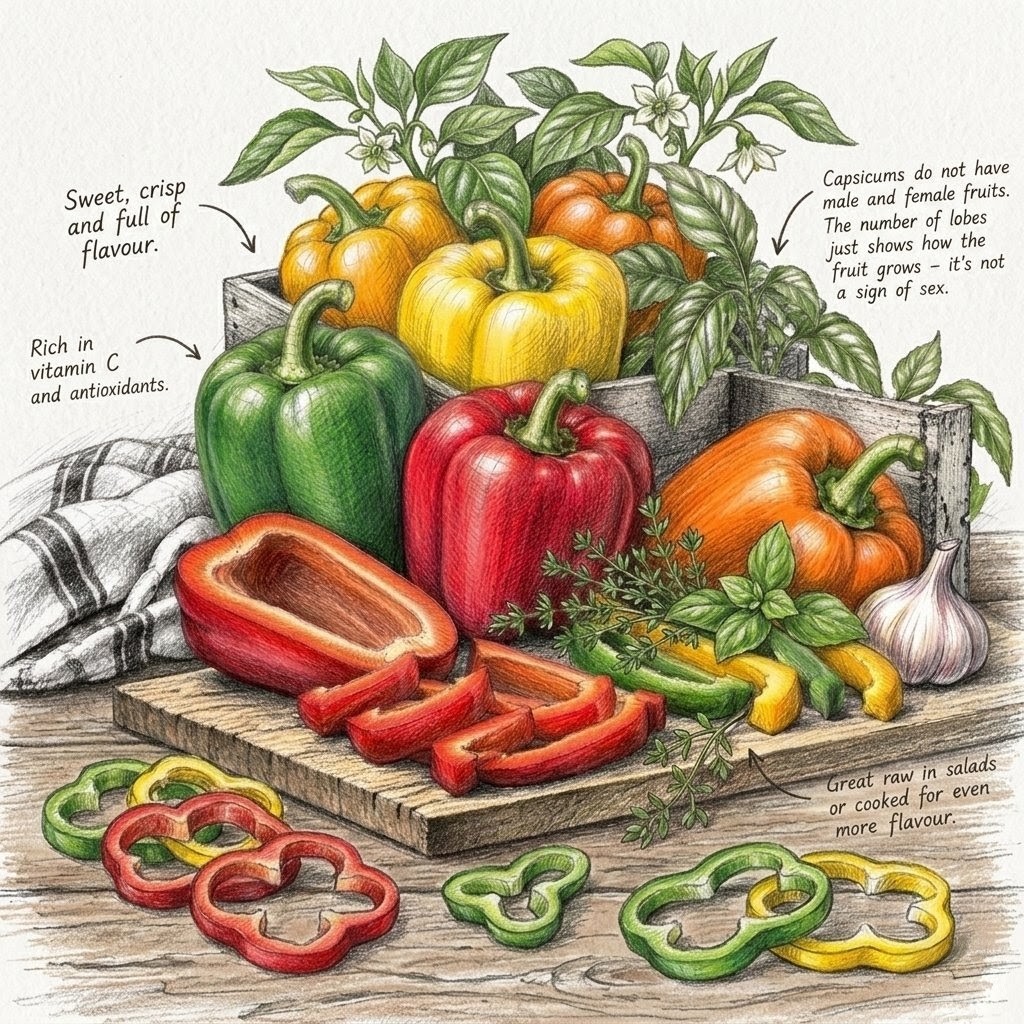
Flavour Profile
Sweet, crisp, and slightly fruity with a mild vegetal undertone. Green ones are more grassy and slightly bitter, while red ones are significantly sweeter and richer in flavour.
Health Benefits
Plenty of vitamin C, particularly in ripe red capsicums, along with vitamin B6 and other carotenoids. As capsicums ripen from green towards red, their colour, sweetness and nutrient profile change.
The white inner ribs are edible, but the seeds and ribs can be bitter, so remove them if you want a cleaner, sweeter flavour.
Buying Tips
Look for capsicums with firm, glossy skin and a good weight for their size. The stem should look fresh rather than dried out.
Avoid capsicums with soft spots, mould, broken skin or significant shrivelling. Green capsicums generally have a more grassy, slightly bitter flavour, while ripe red, yellow and orange capsicums are usually sweeter.
Storage
Store whole capsicums dry in the crisper drawer of the fridge. Avoid washing them until you're ready to use them, as excess moisture encourages spoilage.
Once cut, keep them covered in the fridge and use them promptly. If you have more than you'll use while they're still fresh, chop and freeze them for cooked dishes.
Discard capsicums if they develop mould or rot.
Cooking Uses
Eat them raw for crunch in salads, or roast them until the skin chars and slips off to reveal a silky, smoky texture.
They are the backbone of many stir-fries and fajitas, providing a massive hit of colour and a sweet-savoury base when softened in oil with onions and garlic.
Forkin Food Theory
Capsicums don’t always agree with everyone, and the skin can be one reason.
If you find capsicums leave you feeling uncomfortable or are difficult to digest, try roasting them until the skin blisters, then peel it away. Some people find the softer flesh easier to tolerate without the tougher outer skin.
You also get that silky, sweet roasted flesh underneath. Better texture, deeper flavour, and potentially a bit easier on the gut.
Wild & Wonderful
Red, yellow, and orange capsicums (peppers) have been allowed to ripen further on the plant than green capsicums. Green ones generally taste grassier and slightly more bitter, while fully ripened capsicums are usually sweeter.
And that old “male and female capsicum” thing? Complete myth. Every capsicum flower has the full kit, stamens and pistils both. Three lobes, four lobes, five lobes... it doesn’t tell you the sex or sweetness. No dating apps needed in the capsicum world.
That extra ripening time is also one reason coloured capsicums can cost more. They tie up the plant for longer.