
Butter
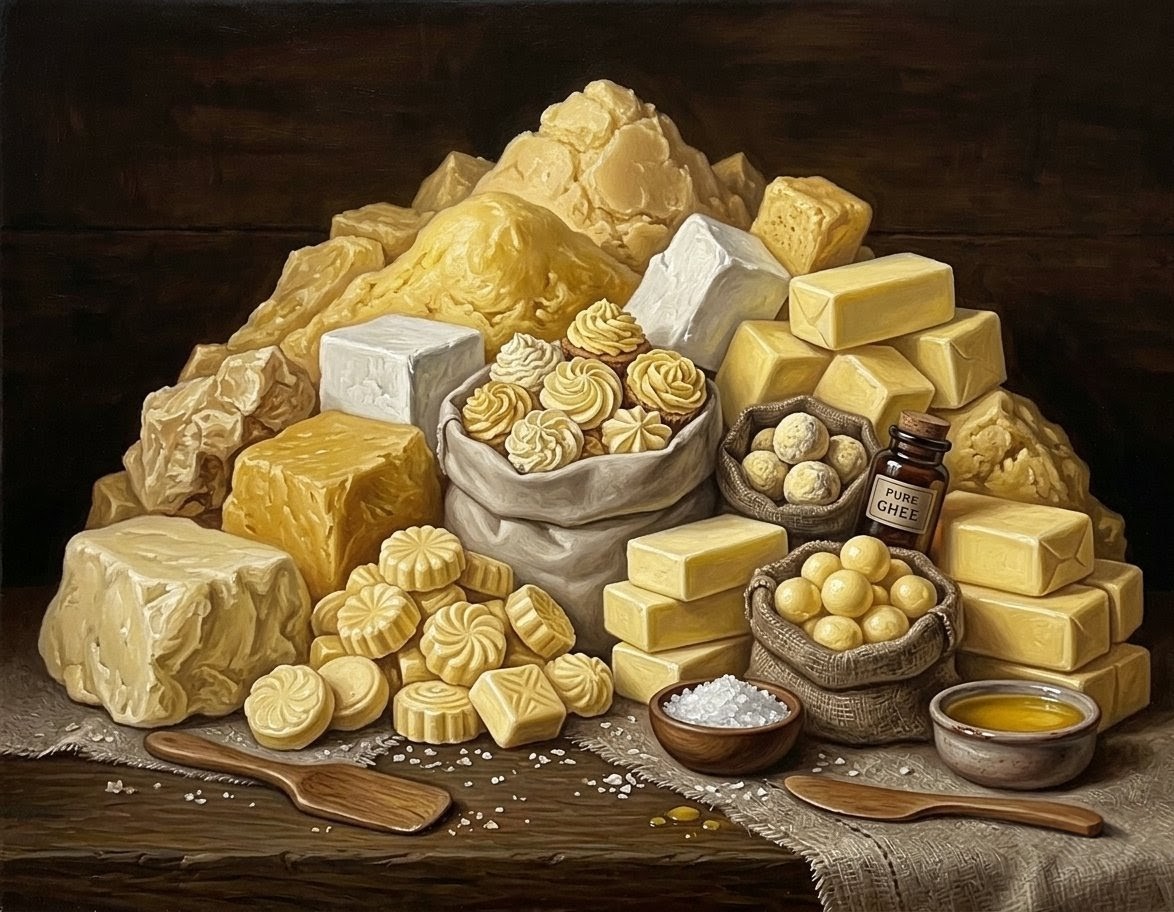
Flavour Profile
Rich, creamy and unbeatably indulgent. Butter provides a fatty mouthfeel that carries other flavours across the palate.
It hits different notes depending on the temperature—cool and silky when solid, nutty and toasted when browned.
Health Benefits
Butter gives you vitamin A for healthy skin and good eyesight, and vitamin E to protect your cells.
It's mostly fat, so it's brilliant for helping your body soak up the fat-soluble vitamins from whatever vegetables you're cooking it with. Think of it as a nutrient delivery system.
Buying Tips
Look for 'cultured' butter if you want more depth. It has been fermented with live bacteria before churning, resulting in a slightly tangy, more complex flavour.
Always check the salt content. High-quality salted butter (like salted cultured butter) is the king of the table.
Storage
Butter absorbs smells like a sponge. Keep it tightly wrapped or in a sealed container away from pungent foods like onions or blue cheese.
It stays perfectly spreadable in a butter dish on the counter for a few days, but for long-term freshness, keep it in the fridge. It also freezes exceptionally well.
Cooking Uses
Use it for sautéing, enrichment and emulsification. Swirl a cold knob into a sauce at the very end to create a glossy, thick finish.
It is also the foundation of the 'roux' for thickening soups and gravies. If you want to elevate the flavour, cook it until it foams and turns nut-brown to create beurre noisette.
Forkin Food Theory
Butter is an emulsion of water suspended in fat.
When you bake with it, that water turns into steam. In pastry, those tiny bursts of steam are what create flaky layers by pushing the dough apart before the fat sets the structure.
This is why "cold butter" is a non-negotiable rule for crusts. If the butter melts before it hits the oven, your steam is gone and your pastry is lead.
Wild & Wonderful
Two things separate good butter from cheap butter: butterfat percentage and what the cows ate.
Standard butter sits around 80% fat. European-style and proper farmhouse butter is 82-86%. That extra fat is why pastry made with good butter shatters instead of crumbles.
Cultured butter has a faint tang because the cream was soured before churning, like old-school farmhouse butter. Sweet cream butter is the bland default.
Grass-fed butter is yellower in summer because the cows are eating actual grass. Pale white butter all year round is a clue.