
Beef
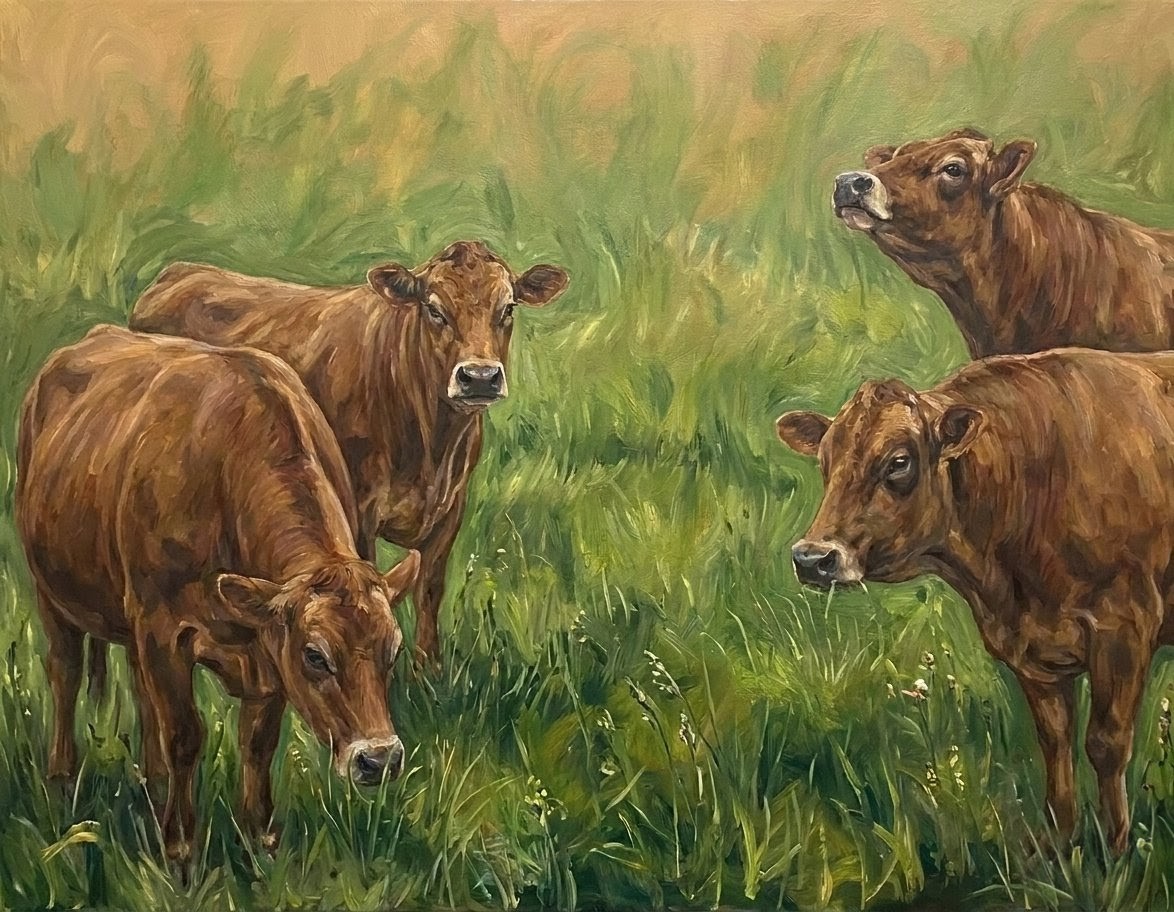
Flavour Profile
Rich, savoury and deeply meaty.
Health Benefits
Protein, iron, zinc and B12, all in forms your body absorbs easily. Iron moves oxygen around, zinc backs up the immune system, B12 keeps the nervous system ticking. No plant really matches red meat on iron.
Buying Tips
Look for good colour and appropriate marbling for the cut.
What beef grades actually tell you. Grading is not one worldwide system, and the labels do not all measure the same thing. Australia's MSA system uses information about the animal, carcase, individual cut, ageing and cooking method to predict eating quality. In the United States, USDA grades such as Prime, Choice and Select are based largely on marbling and maturity. Canada uses grades including Prime, AAA, AA and A, while the EUROP system used across Europe classifies carcase shape and fat cover. Different systems built for different jobs, so the labels cannot be compared directly.
A grade can help sort beef into more consistent groups, but it does not guarantee that one steak will taste better than another. It cannot season the meat, control the heat, judge the temperature, rest it or slice it properly. A grade gives you information. The cook still decides what ends up on the plate.
Storage
Keep raw beef refrigerated and wrapped or sealed so it cannot leak onto anything else. Store it on the lowest shelf of the fridge, away from ready-to-eat food, so any drips go down rather than across your salad.
Freeze beef before its quality starts to drop, not on the last day of its use-by. Well-wrapped beef freezes well; tired beef frozen at the last minute thaws out tired. Thaw it in the fridge on a plate or tray, never on the kitchen bench — slow, cold thawing keeps it safe and holds the texture together.
Treat mince more carefully than whole cuts. Grinding spreads any surface bacteria right through the meat, so mince has a shorter safe life and needs to be cooked through rather than served pink. Follow the date and storage instructions on the packet — they are written for how that specific pack was processed and packed.
Cooking Uses
Steaks, roasts, braises, mince, burgers and slow cooking.
Match the cut to the cooking method. Tender cuts (fillet, sirloin, ribeye, rump) generally suit fast, dry heat — grill, pan or hot oven. Hard-working cuts (chuck, brisket, cheek, shin, oxtail) carry more connective tissue and need lower heat, moisture and time so the collagen can break down. A good cut cooked the wrong way is disappointing. A cheaper cut cooked properly can be outstanding.
Slice across the grain. Look at the direction the muscle fibres run and slice across them, not along them. Cutting through the fibres shortens them and makes the beef noticeably easier to chew — this matters most on steak, brisket, flank and any long, obvious grain.
Forkin Food Theory
Fat equals flavour.
Lean beef can be excellent, but marbling contributes significantly to taste, juiciness and eating quality.
Tender does not always mean more flavour. Fillet is tender because it comes from a muscle that does very little work, but that does not automatically make it the best-tasting cut. Chuck, brisket, cheek and shin work harder and carry more connective tissue. Give them low heat, moisture and enough time and that collagen breaks down into gelatin, giving you richer meat and a better sauce.
Marbling is not the fat cap. Marbling is the fine fat running through the muscle. The fat sitting around the outside is the fat cap. Marbling can add flavour and juiciness, but it is only one part of eating quality — more marbling does not automatically mean every person will prefer the beef.
Searing does not seal in juices. Searing creates colour, crust and flavour through browning. It does not form a waterproof seal around the meat. Keeping beef juicy comes down to controlling the heat, cooking it to the right temperature and resting it properly.
Wild & Wonderful
The two things that matter most: how the animal was raised and how the cut was aged.
Grass-fed vs grain-finished. Grass-fed beef has a deeper, beefier, almost gamey flavour and a yellower fat. Grain-finished is milder, more marbled, more uniform. Neither is "better" — they're different.
Dry-aged vs wet-aged. Dry-aged sits in a controlled humid room for weeks. Moisture evaporates, enzymes break down muscle fibres, the flavour concentrates and goes nutty and complex. Wet-aged (in a vacuum bag) tenderises but doesn't develop the same flavour. Most supermarket "matured" beef is wet-aged for 7-14 days. Proper dry-aged beef from a butcher is 28-60+ days and you can taste the difference immediately.
MAP packaging affects beef colour too. A lot of supermarket beef is packed using Modified Atmosphere Packaging, where the air inside the tray is changed to help shelf life, colour and spoilage control. Oxygen helps beef stay bright red, carbon dioxide helps slow spoilage, and nitrogen helps fill and protect the pack. That does not mean the beef is bad. It means colour alone is not enough. Bright red beef can still be fine, darker beef can still be fine, and vacuum-packed beef can look purple before it blooms red again once opened. Judge beef by smell, texture, date, packaging, storage and the cut itself, not just colour.
The red liquid is not blood. Most of the blood is removed during processing. The red liquid pooling in the packet is mainly water mixed with myoglobin, the protein that gives meat its colour.
Mince labelled "lean" (under 10% fat) makes dry burgers and bland Bolognese. 15-20% fat is the sweet spot for flavour.