
Creatine
Flavour Profile
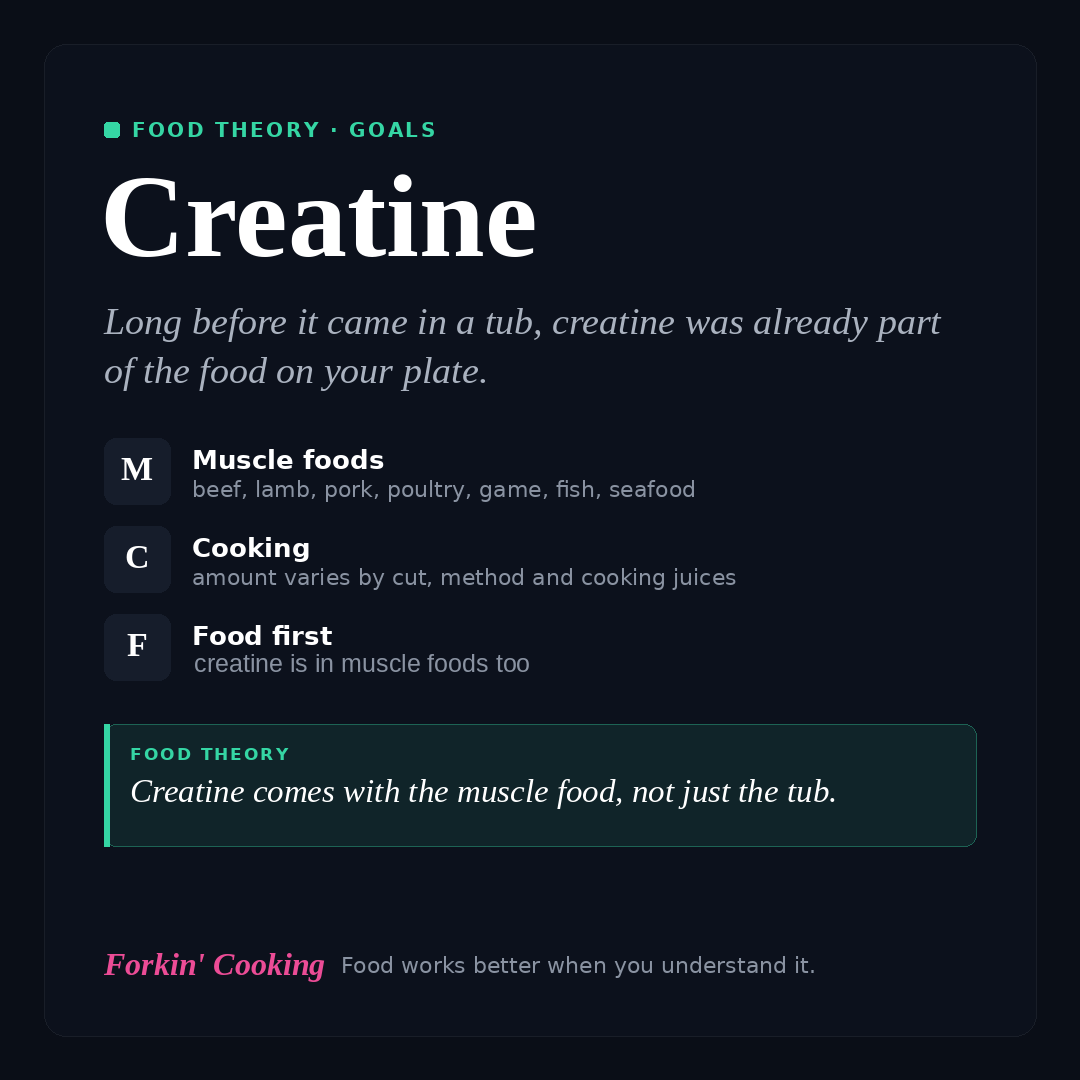
Creatine has no flavour of its own. The flavour comes from the meat, poultry, fish or seafood itself. Creatine is simply one of the many naturally occurring compounds found in muscle food.
Health Benefits
Creatine is a natural compound found mainly in animal muscle foods. It is not a vitamin, not caffeine, and not a stimulant. It is not a miracle food, and this is not supplement advice. For us, the point is simple: creatine is one of the natural compounds that comes with meat, poultry, fish and seafood. No powders. No promises. Just food information.
Buying Tips
The main food sources are muscle foods:
- Beef, lamb, pork - Chicken, turkey, duck - Game meat — venison, kangaroo, rabbit - Fish — salmon, tuna, sardines, herring, mackerel, cod - Seafood — prawns, mussels, oysters, scallops, squid
Buy the muscle food you would normally cook. Fresh, frozen or tinned all work. No creatine powder needed — the food already contains it.
Storage
Creatine sits in the muscle tissue itself, so store your meat, fish or seafood the way you normally would — chilled, covered, and used within its use-by date. Freezing does not destroy it. What you keep or lose comes down to cooking, not storage.
Cooking Uses
Creatine content on the plate depends on the cooking method more than most people realise.
**Methods that keep more of it:** braising, stewing, slow-cooking, pan sauces made from the pan juices, poaching in a broth you actually eat.
**Methods that lose more of it:** high-heat grilling, roasting where the drippings are discarded, boiling in water that is poured away.
The rule of thumb: if you eat the juices, you keep more of what was in the meat. If you throw the juices out, you throw some of it out with them.
Forkin Food Theory
How much creatine ends up on your fork can vary depending on:
- The animal - The cut - Raw weight vs cooked weight - The cooking method - Moisture loss during cooking - How much of the cooking juices are kept or lost
We do not put exact creatine gram amounts on recipes. Numbers only mean something when they come from a verified food database or lab value for that specific cut, cooked that specific way — and even then they are estimates. Better to know where it comes from than to invent a number.
Wild & Wonderful
Your body already makes creatine on its own — mainly in the liver, kidneys and pancreas. Food is the other natural source, and it is almost entirely found in animal muscle foods. Two natural taps: one internal, one on your plate. Nothing else needed.