
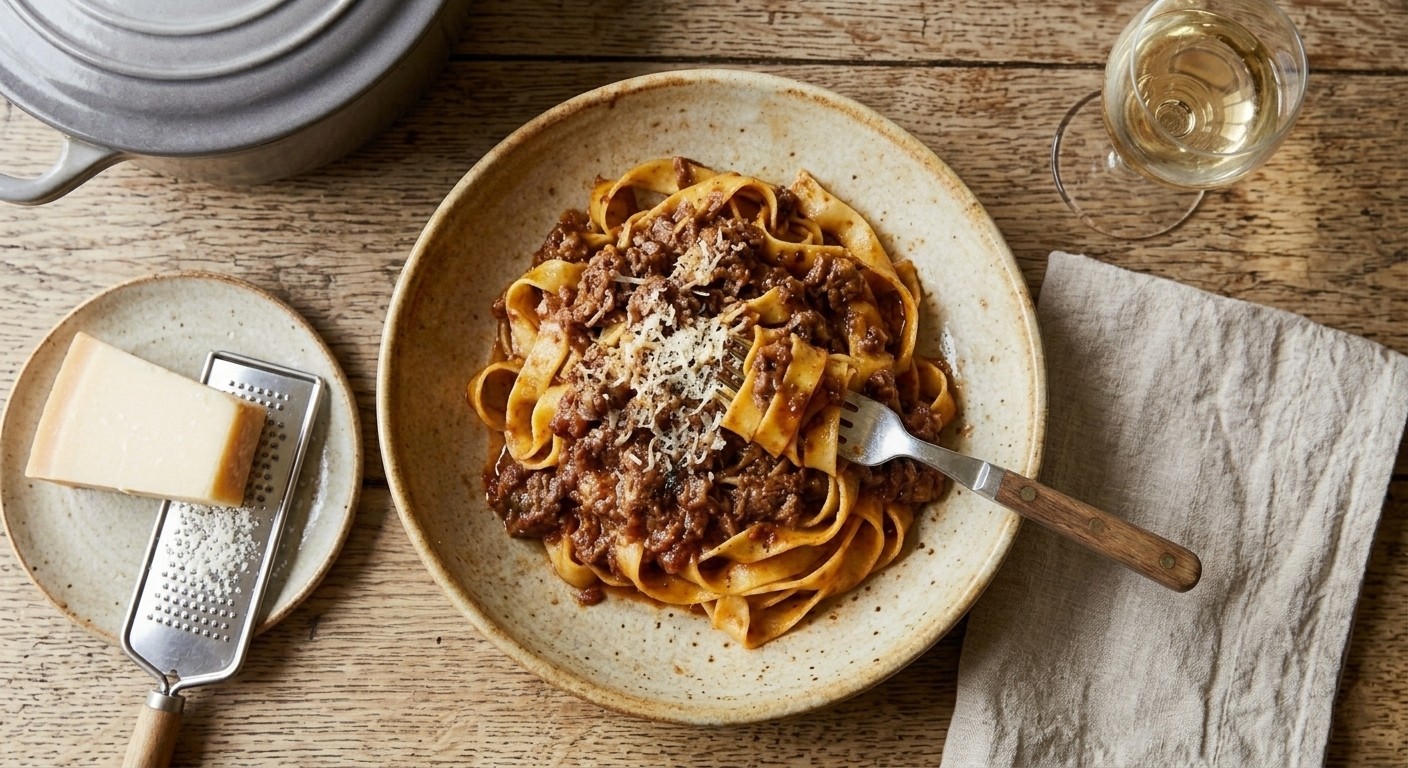
Next-Level Sunday Ragù
Food works better when you understand it. Ragù is proof.
Most ragù recipes tell you what to do. This one tells you why it works. The difference between a good ragù and a great one isn't the ingredients — it's understanding what's happening in the pot. Why dry meat browns and wet meat steams. Why milk goes in before wine. Why a sauce that barely moves on the surface tastes deeper than one that bubbles hard. Get the technique and the recipe almost cooks itself.
A ragù is really four chemical conversations happening at once: meat browning, fat rendering, collagen melting, and acid balancing. Run each one at the right temperature for the right amount of time and you end up with a glossy, deep, savoury sauce. Rush any of them and you can taste exactly which corner got cut.
- →Browning is flavour creation, not cooking. The Maillard reaction only kicks in above ~140°C — which only happens when the meat surface is dry and the pan isn't crowded. Grey mince isn't undercooked, it's flavour you never made.
- →Milk before wine isn't a tradition, it's chemistry. Milk proteins coat the meat fibres and buffer the acid that's about to arrive from the wine and tomatoes. Add it after and the proteins curdle on contact with the acid instead of protecting the meat.
- →Low and slow melts collagen into gelatin. Below about 90°C the tough connective tissue in chuck and shoulder slowly unwinds into the silky, lip-coating texture that makes a ragù feel rich. Above that, the muscle fibres squeeze out their moisture and the meat goes dry and stringy — same pot, opposite result.
- →A barely-there simmer concentrates without scorching. Hard bubbles drive off the aromatic compounds you want to keep and caramelise the tomato against the pan bottom. Lazy bubbles reduce gently and let the fat emulsify into the sauce instead of separating on top.
- →Pasta water is liquid glue. The starch you boiled out of the pasta turns plain water into a mild emulsifier — it binds the fat in the ragù to the water, so the sauce clings to every ribbon instead of pooling at the bottom of the bowl.
Common Mistakes
- ✗Crowding the pan when browning. Too much meat at once drops the surface temperature, water leaks out, and you boil instead of sear. No crust, no fond, no foundation — the whole sauce coasts on whatever flavour the tomato brings.
- ✗Cooking too hot through the simmer. A rolling bubble squeezes the meat dry, scorches the tomato against the bottom of the pot, and blows off the aromatic compounds you spent half the day building.
- ✗Chasing acidity with sugar. If the sauce tastes sharp at hour two it's not over-acidic, it's under-cooked. Sugar masks the problem and leaves a flat, jammy aftertaste. Keep cooking — the acid mellows on its own.
- ✗Over-reducing. Push the sauce too far and the fat splits out, the tomato turns to paste, and the texture goes claggy. You want glossy and pourable, not stiff enough to stand a spoon in.
- ✗Drowning the pasta. Ragù is a coating, not a soup. Too much sauce and you taste tomato; the right amount and you taste meat, fat, pasta and sauce in one mouthful.
- ✗Under-seasoning along the way. Salt added at the end sits on top; salt added in stages (meat, soffritto, simmer) seasons from the inside out. Taste every time you stir.
Tips & Tricks
- →Sauce too thick? Loosen with hot stock or pasta water, a tablespoon at a time, off the heat. Never plain cold water — it dulls the flavour and shocks the emulsion.
- →Sauce too thin? Pull the lid right off and nudge the heat up by one notch for 15–20 minutes. Stir more often so the bottom doesn't catch.
- →Tastes too acidic? Don't reach for sugar. Add 50 ml more milk or a knob of butter and keep simmering — the dairy fat rounds the sharp edges in minutes.
- →Tastes too salty? A peeled raw potato simmered in for 20 minutes pulls some of it out. Or stretch the batch with extra stock and crushed tomato and re-balance from there.
- →Looks dry or oily-on-top? The fat has broken out. Add a splash of pasta water or stock and stir hard off the heat — the starch will pull it back into emulsion.
- →Reheating leftovers? Low and slow in a pan with a splash of stock, not the microwave. Microwaving boils the fat off the surface and the sauce splits.
- →A parmesan rind dropped in during the simmer adds savoury depth for free. Fish it out before serving.
- →Always cook the pasta a minute shy and finish it in the sauce. That last minute in the pan is where the ragù actually marries the pasta.
Flavour Twists
Crumble 100g black pudding in with the pancetta as it renders. It melts down into the fat and adds a peppery, iron-rich depth — savoury without tasting of black pudding. A very Scottish upgrade to a very long-cook sauce.
Off the heat at the very end, stir in a tablespoon of whisky. The alcohol flashes off in the residual warmth and leaves behind a soft, smoky, slightly sweet note that lifts the whole pot. Don't overdo it — you're seasoning, not making a cocktail.
Swap the white for a dry red. You'll get a heavier, more brooding sauce — bigger tannins, deeper colour, less brightness. Better with pappardelle than tagliatelle because the wider noodle can carry the extra weight.
Leftover ragù is engineered for this. Layer with béchamel and fresh pasta sheets, bake at 180°C until the top blisters. A second night of cooking concentrates the sauce even further — most people prefer the lasagne to the bowl.
Substitutions
- Pancetta→ Smoked streaky bacon or guanciale.Guanciale renders more fat and gives a richer mouthfeel. Bacon adds smokiness the original doesn't have — not wrong, just a different sauce.
- Dry white wine→ Dry vermouth, or extra stock plus a tablespoon of white wine vinegar.The wine is doing two jobs: acid to balance the fat, and aromatic compounds for depth. Skip it entirely and the sauce tastes one-note.
- Whole milk→ Half single cream, half water — or full-fat natural yoghurt loosened with a splash of water and stirred in off the heat.You need the fat and the proteins. Skim milk has neither — the buffering effect on the acid disappears and the sauce stays sharp. Plant milks don't have the casein proteins doing the buffering job, so skip them here.
- San Marzano tomatoes→ Any good-quality whole tinned tomato.San Marzanos are lower in seeds and acid, which is why they're easy. A standard tin works — just plan on a slightly longer simmer to mellow the extra acidity.
- Tagliatelle→ Pappardelle, fresh egg fettuccine, or rigatoni.You need surface area or grooves to hold the sauce. Long thin pasta like spaghetti has nowhere for the ragù to grab.
Fridge 4 days in a sealed container. Freezer 3 months in portion-sized tubs. Better on day two — the fat re-emulsifies overnight and the flavours settle. Reheat low and slow with a splash of stock or pasta water to bring the gloss back.
Food works better when you understand it. Ragù is proof.
Method
- 1
Pre-salt the meats, render pancetta from cold
Salt the beef and pork lightly, spread on a plate, leave uncovered in the fridge while you prep — 10 minutes minimum, an hour is better. Drier surface = better browning. Put pancetta in a cold heavy pot, set it on low, and let the fat render slowly until golden and crisp (~8 minutes). DON'T drop pancetta into a hot pan — it seizes and never gives up its fat.
- 2
Brown the meats dry, in batches
Pat the beef and pork dry with paper towel — wet meat steams, it doesn't brown. Crank the heat, work in two or three batches in a single layer, and DON'T STIR for 90 seconds. You want deep mahogany crust, not grey. Crowd the pan and you've thrown away the whole dish.
- 3
Soffritto, slow and jammy
Drop the heat to low. Sweat onion, carrot and celery in the rendered fat with a pinch of salt for 25–30 minutes, stirring every few minutes, until soft, sweet and lightly caramelised. DON'T rush this on high heat — burnt edges turn the whole ragù bitter and there's no fixing it once it's in.
- 4
Milk first — reduce until almost dry
Meat back in. Pour over the milk and simmer gently until it's almost completely evaporated and the pan smells nutty (~20 minutes). This tenderises the proteins and rounds out the acidity from the wine and tomatoes to come. DON'T skip it, and DON'T add it after the wine — order matters.
- 5
Wine — dry white, reduced hard
Pour in the white wine and reduce by two-thirds. White, not red — it keeps the sauce bright and lets the meat speak. DON'T use 'cooking wine'; if you wouldn't drink a glass, it doesn't go in the pot.
- 6
Tomatoes in — barely a simmer, five hours
Add crushed tomatoes, bay leaf, parmesan rind, and a good crack of pepper. Bring to a gentle bubble then drop to the lowest flame your hob will hold — surface barely moving. Lid cracked. Stir every 30 minutes, splashing in stock if it tightens, for a full five hours. DON'T let it bubble hard — that's tomato sauce, not ragù. Done when it's glossy, deep brick-red, and a slick of fat sits on the surface.
- 7
Cook the pasta one minute shy
Heavily salted water (taste like the sea), rolling boil. Cook tagliatelle one minute less than the packet says. Reserve a big mug of pasta water before you drain — you'll need it.
- 8
Marry the pasta in the pan
Tip drained pasta into a wide pan with about a ladle of ragù per serve. Toss over low heat for 60 seconds, loosening with splashes of pasta water until everything is glossy and the sauce clings to every ribbon. Off the heat, stir through the parmesan. DON'T drown the pasta in sauce, and DON'T add cheese over flame — it goes stringy.
- 9
Plate and finish
Twist into warm bowls, spoon a little more ragù on top, shower with parmesan and another crack of pepper. Eat immediately. Leftover ragù is better on day two and freezes brilliantly for three months.
More Cooking lessons
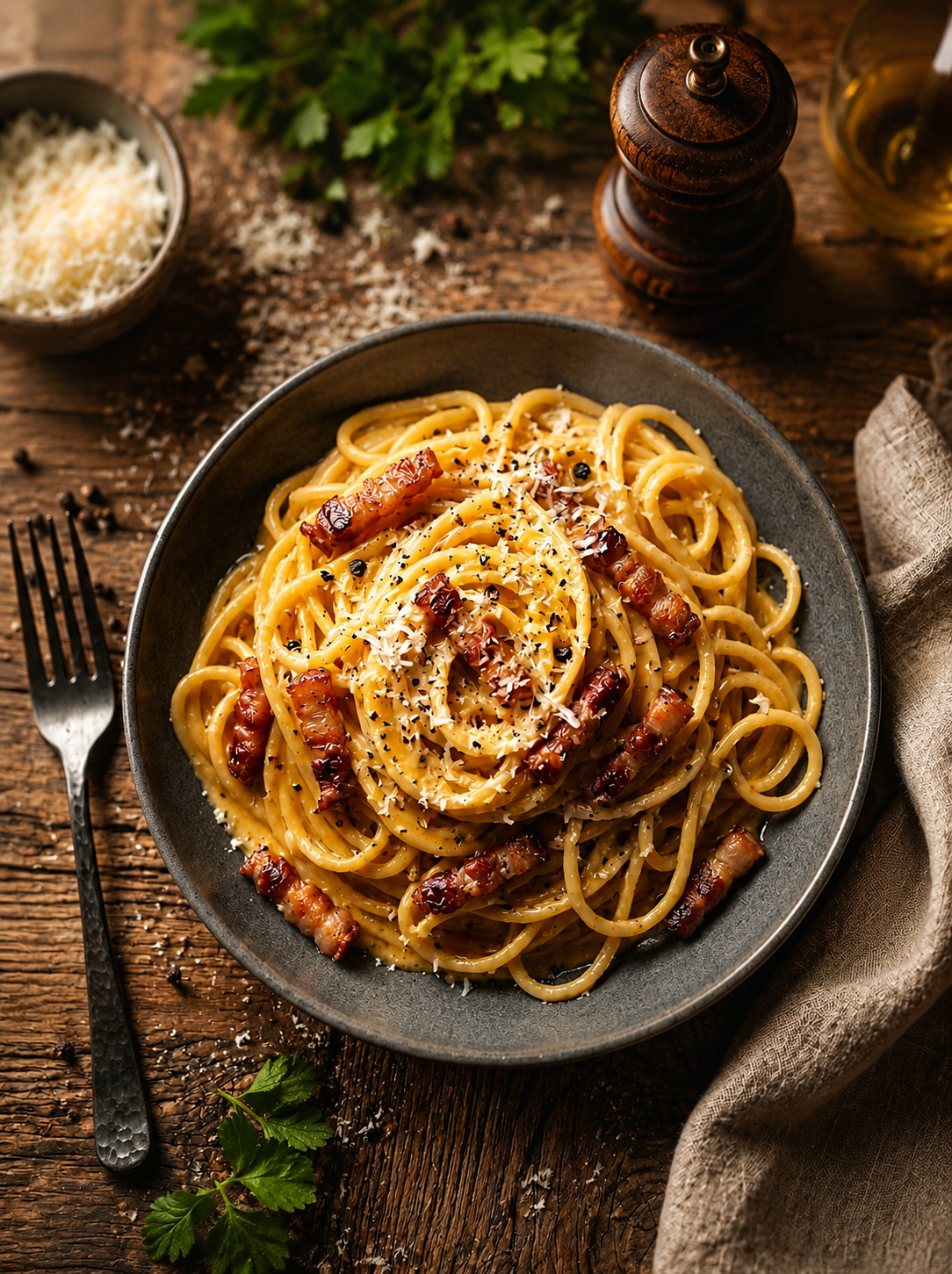
The Only Carbonara That Survives the Forkin Test
No cream. No panic. Pure protein-rich indulgence.
Bacon & Bourbon Jam
Sweet, smoky, boozy. The condiment that ruins all other condiments.

Cast-Iron Charred Brussels Sprouts
Burnt edges, soft middles, salty pork, sharp cheese. The sprouts that convert sceptics.
Cook with it
Related recipes
Leave a comment
Drop your name, email and a note — I read every one.